

Musa Kâzım GÜLÇÜR
1 / Dhul Hijjah / 1445
7 / June / 2024
Contents
5. Faith in The Resurrection Hereafter
6. Faith in the Divine Decree About Both Good and Evil
أَعُوذُ بِاللَّهِ مِنَ الشَّيطَانِ الرَّجِيمِ
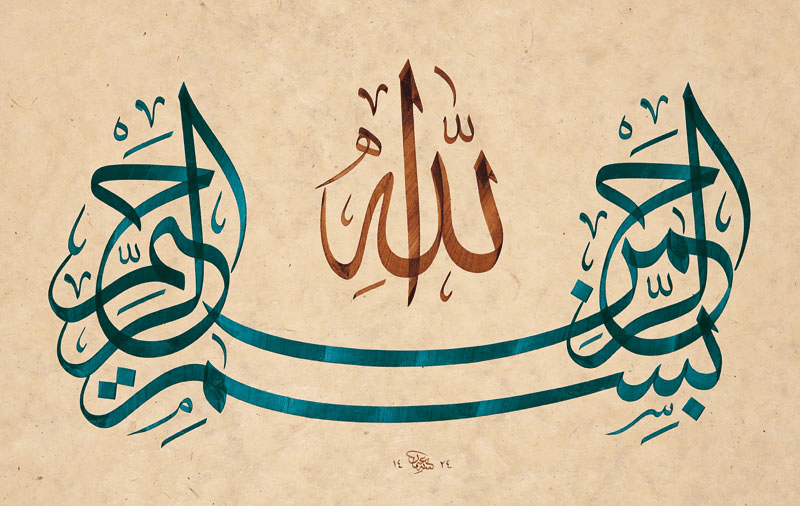
بِـسْـــــــــــــــــــــــــــــــمِ اللَّهِ الرَّحْمَنِ الرَّحِيم
فَاٰمِنُوا بِاللّٰهِ وَرُسُلِهٖ وَاِنْ تُؤْمِنُوا وَتَتَّقُوا فَلَكُمْ اَجْرٌ عَظٖيم
“Believe in Allâh and His messengers. If ye believe and ward off (evil), yours will be a vast reward.”
(Sūrat Āl ʿImrān, 3/179; Sūrat al-Nisāʾ, 4/171)
قَالَ فَأَخْبِرْنِي عَنِ الإِيمَانِ
أَنْ تُؤْمِنَ بِاللَّهِ وَمَلاَئِكَتِهِ وَكُتُبِهِ وَرُسُلِهِ وَالْيَوْمِ الآخِرِ وَتُؤْمِنَ بِالْقَدَرِ خَيْرِهِ وَشَرِّهِ
(Angel Gabriel) said: ‘Inform me about Iman (faith)’ He (the Holy Prophet) replied:
“That you affirm your faith in Allâh, in His angels, in His Books, in His Apostles, in the Day of Judgment, and you affirm your faith in the Divine Decree about good and evil.”
(Sahih Muslim, 8a; Sahih al-Bukhari, 50)
Abstract
This article delves into the fundamental tenets of Islam, focusing on the faith in the Almighty Allâh, angels, sacred texts, prophets, life after death, and the divine predestination of good and evil. It also underscores the significance of these beliefs in molding a Muslim’s spiritual journey, influencing their decisions and interactions with others, and offering solace and guidance in daily life.
This article is trying to clarify the core religious beliefs in Islam, as articulated in the renowned hadith of Angel Gabriel. It references texts from the Qur’an and Sunnah to emphasize the paramount importance of these beliefs in the Islamic faith. The aim is to highlight the significance and essential nature of the six pillars of belief for those sincerely dedicated to Islam.
Preface
Islam represents a holistic approach to life. Individuals embracing Islam are expected to fully dedicate themselves to Almighty Allâh, aligning their attitudes, ambitions, and actions with the Will of the Almighty Creator.
This holistic lifestyle is centered on comprehending and adopting the core principles of the six fundamental pillars that constitute faith, worshipping Almighty Allâh, and adhering to the teachings of the Qur’an and Sunnah. Muslims who steadfastly follow these pillars can cultivate a more profound connection with Almighty Allâh, strengthen their faith, and enhance their spiritual and communal well-being.
The Six Pillars of Faith represent the core beliefs that a Muslim embraces in their submission to Almighty Allâh, distinct from the Pillars of Islam, which are the prescribed ritualistic actions grounded in these beliefs.
The Six Pillars of Faith constitute the core beliefs in Islam, encompassing the belief in Allâh, angels, revealed scriptures, prophets, the Day of Judgment, and the divine decree.
Faith consists of six pillars fundamental to a Muslim’s spiritual path. These pillars are the core of faith, establishing a framework of values and principles that guide a Muslim’s life. The pillars significantly shape a Muslim’s choices and engagement with others. Faith is a vital force in a Muslim’s everyday existence, offering inner peace, comfort, and a clear sense of direction. It fosters a profound connection with the Almighty God, crucial for the afterlife.
Abdullah ibn Umar reported:
One day we were sitting in the company of Allâh’s Apostle (ﷺ) when there appeared before us a man dressed in pure white clothes, his hair extraordinarily black. There were no signs of travel on him. None amongst us recognized him. At last, he sat with the Apostle (ﷺ). He knelt before him placed his palms on his thighs, and said:
“Muhammad, inform me about al-Islam.”
The Messenger of Allâh (ﷺ) said:
“Al-Islam implies that you testify that there is no god but Allâh and that Muhammad is the messenger of Allâh, and you establish prayer, pay Zakat, observe the fast of Ramadan, and perform pilgrimage to the (House) if you are solvent enough (to bear the expense of) the journey.”
He (the inquirer) said:
“You have told the truth.”
He (Umar ibn al-Khattab) said: “It amazed us that he would put the question and then he would himself verify the truth.”
He (the inquirer) said:
“Inform me about Iman (faith).”
He (the Holy Prophet) replied:
“That you affirm your faith in Allâh, in His angels, in His Books, in His Apostles, in the Day of Judgment, and you affirm your faith in the Divine Decree about good and evil.”
He (the inquirer) said:
“You have told the truth.”
He (the inquirer) again said:
“Inform me about al-Ihsan (performance of good deeds).”
He (the Holy Prophet) said:
“That you worship Allâh as if you are seeing Him, for though you don’t see Him, He, verily, sees you.”
He (the enquirer) again said:
“Inform me about the hour (of the Doom).”
He (the Holy Prophet) remarked:
“One who is asked knows no more than the one who is inquiring (about it).”
He (the inquirer) said:
“Tell me some of its indications.”
He (the Holy Prophet) said:
“That the slave girl will give birth to her mistress and master, that you will find barefooted, destitute goat herds vying with one another in the construction of magnificent buildings.”
He (the narrator, Umar ibn al-Khattab) said: “Then he (the inquirer) went on his way but I stayed with him (the Holy Prophet) for a long while. He then, said to me:
“Umar, do you know who this inquirer was?”
I replied: “Allâh and His Apostle know best.”
He (the Holy Prophet) remarked:
“He was Gabriel (the angel). He came to you to instruct you in matters of religion.”
(Sahih Muslim, 8a; Sahih al-Bukhari, 50)
1. Faith in Almighty Allâh
“O ye who believe! Believe in Allâh and His messenger and the Scripture which He hath revealed unto His messenger and the Scripture which He revealed aforetime. Whoso disbelieves in Allah and His angels and His scriptures and His messengers and the Last Day, he verily hath wandered far astray.” (Sūrat al-Nisāʾ, 4/136)
“As for those who believe in Allâh, and hold fast unto Him, He will cause them to enter into His mercy and grace and will guide them unto Him by a straight road.” (Sūrat al-Nisāʾ, 4/175)
The existence of Almighty Allâh is deserving of all praise. He is the one to whom hearts are devoted, worshiped, and in awe of His greatness and majesty. He is the most merciful Supreme Being, known by His beautiful names and sublime attributes, entirely beyond our senses and understanding.
Almighty Allâh is the Most Evident, with all things indicating His presence, and the Most Concealed, beyond our sensory understanding. Almighty Allâh is a Primordial Being, unfathomable to any other than Himself. This inaccessibility to the human intellect is attributed to the overwhelming majesty and radiance of Almighty God, the Boundless and the Everlasting.
After Almighty Allâh rewards people who deserve reward and punishment to those who deserve punishment, He will destroy the Throne, the Kursi, the Angels, and all existence. After all, it is the last of the endings, from which no other being will remain.
Almighty Allâh is the singular creator of all that exists, the perpetual light of the heavens and the earth. All existence relies upon Him, and He requires nothing. He alone crafts time, molds space, illuminates souls, and guides hearts through their transformations. He is eternally our greatest ally.
The Almighty Allâh is ever-present with us as we sleep, Himself never needing slumber. He perfectly perceives and understands all that exists. Indeed, Almighty God is beyond full human comprehension. We can only grasp what He has revealed. His presence is in every direction we face.
The Almighty Allâh magnifies the reward of our good deeds by up to seven hundredfold. Contrary to His approach to good deeds, He only notes the errors in evil deeds. His magnificent names and sublime attributes reveal themselves in the diversity of existence. Every entity in existence signifies itself. All that exists, does so through His love.
2. Faith in Angels

“The Messenger believeth in what hath been revealed to him from his Lord, as do the men of Faith. Each one (of them) believes in Allâh, His angels, His books, and His Messengers. “We make no distinction (they say) between one and another of His Messengers.” And they say: “We hear, and we obey: (we seek) Thy forgiveness, our Lord, and to Thee is the end of all journeys.” (Al-Baqarah, 2/285)
“Whoever is an enemy to Allâh and His angels and prophets, to Gabriel and Michael – lo! Allâh is an enemy to those who reject Faith.” (Al-Baqarah, 2/98)
In Islam, the belief in angels is a core principle. Angels are unseen entities that exist beyond our material realm, imperceptible to human sight, and act as faithful emissaries of Almighty Allâh, the sovereign of the cosmos. The main references for comprehending this invisible domain are the authentic hadiths and, most importantly, the Holy Qur’an.
The term “angel” signifies a messenger, and it is believed to have evolved from the word “force,” reflecting the power of these celestial beings. Angels, under their roles, embody both aspects of the term.
Belief in the existence of angels is one of the six pillars of faith in Islam. Angels, created from light, are sinless entities. They are often mentioned in the Holy Qur’an verses and the Prophet’s hadiths. As pure and obedient beings, angels never defy the commands of Almighty Allâh.
Angels hold a significant place in Islamic theology and cosmology, tasked with crucial roles, including recording all human actions, both positive and negative. The belief in angels is a fundamental tenet of Islam. They carry out essential functions within the physical universe, on Earth, in interpersonal relations, and across the spiritual and celestial realms.
The belief in the existence of angels is a crucial element that reinforces all other aspects of faith, particularly the belief in Almighty Allâh. Almighty Allâh, who is all-powerful and omniscient, carries out His divine will in the world by delegating specific tasks to His angels.
The belief in angels provides a significant source of hope, comfort, and support. Angels assist believers in times of need, offer guidance, and are constantly present, especially during acts of remembrance of Almighty Allâh. In Islam, the belief in angels is a core tenet, with angels having a profound influence on fostering positive moral conduct among the faithful.
The belief in angels can be traced back to the time of the first prophet, Adam. The continuation of angelic belief in ancient societies is a subject of historical study. In the ancient Near East, angels were often portrayed as divine messengers. In these early societies, they served multiple roles, such as protecting people, offering guidance, and assisting in achieving their goals.
Angels are benevolent spiritual entities that derive their power from a superior source, which means they are not autonomous. They are designated and dispatched as messengers between the Supreme Power that commissions them and the individuals they are sent to. Unlike humans, angels do not consume food, partake in drink, require sleep, or possess gender-specific traits. They are devoid of the physical conditions inherent to humans. By the will of Allâh, they may appear in human or other physical forms.
In Islamic belief, angels were created before humans. Unlike humans and other living beings, angels do not engage in eating and drinking. They possess powers and dimensions beyond human understanding. The exact nature of their hands is not known to us. Angels are remarkable entities with multiple wings and are genderless. They exist in various ranks and degrees.
Angels exist in a perpetual state of worship and prostration before Almighty Allâh, driven by reverence. They do not grow weary or bored of their devotion. Angels are ceaselessly praying for the Glorious Prophet. Those who bear the Almighty Throne beseech Allâh to grant believers virtuous entry into Heaven and safeguard them from Hell’s punishment. In times of hardship, angels are particularly supportive of the faithful.
The principal role of the angel Gabriel is to deliver revelations to the prophets. Almighty Allâh imparts His commands and prohibitions to the prophets via this sacred angel. Gabriel also governs the winds and spiritual armies. With Almighty Allâh’s command and permission, Angel Michael manages vegetation and rainfall, ensuring the orderly progression of natural phenomena. The angel Raphael is tasked with sounding the trumpet to commence the Day of Judgment, while the Angel of Death is charged with concluding the lives of all living beings.
The belief in angels can bring personal advantages like spiritual solace, a robust feeling of safety, direction toward virtue, and optimism about what lies ahead. Conversely, not believing in angels may result in personal anguish or a sense of deprivation. This disbelief can adversely impact both personal well-being and societal concord.
3. Faith in Holy Books

“Declare (O Muslims): We believe in Allâh and in what has been revealed to us, and in what was revealed to Abraham, Ishmael, Isaac, Jacob, and the tribes, as well as in what Moses, Jesus, and the Prophets received from their Lord. We do not differentiate among them; to Him, we are submitters.” (Al-Baqarah, 2/136)
In Islam, one of the six core beliefs is that the Almighty Allâh revealed scriptures containing His commands and prohibitions to His selected prophets, and all these revelations are considered true and authentic. These scriptures are known as “Heavenly Books”, signifying that they are the books bestowed by Allâh Almighty. The divine books are compilations of the revelations sent by Almighty Allâh to His prophets.
The Holy Qur’an frequently underscores the importance of the tenet ‘belief in the books’ within its verses. These passages commonly highlight the significance of faith in the scriptures that Allâh revealed through Gabriel.
This verse instructs us to believe in the books referenced, their original messages, and the validity of each Sharia in its respective era. The cornerstone of this belief is faith in Almighty Allâh, a tenet central to all true religions. Furthermore, the verse directs us to trust the scriptures given to all prophets and in the sacred texts, including the Holy Qur’an, which was bestowed upon Muslims.
Belief in sacred texts is a fundamental part of faith in the existence of Almighty Allâh, His oneness, the presence of angels, and the commissioning of prophets. Almighty Allâh, through His selected prophets, revealed books to steer humanity toward the correct path. Faith in these texts enables individuals to uphold the natural harmony and order of the world. It allows them to recognize actions that align with the will of the Almighty, shun those that do not, and comprehend their responsibilities to Him, themselves, and their community. Believing in sacred texts involves completely embracing the teachings, guidance, commands, and prohibitions these holy books contain.
Belief in sacred texts entails embracing the core tenets outlined within these scriptures. Such tenets encompass the worship of a Supreme Being, the encouragement of virtuous conduct and deeds, commitment to high ethical standards, and the eschewal of harmful actions. Moreover, this belief encompasses comprehending the doctrines and rules that shape societal and political structures.
For the faithful, embracing the teachings of Divine scriptures is an acknowledgment that their personal, social, and philosophical lives are influenced by divine revelation. These sacred texts reflect the words and might of Almighty Allâh, carrying consistent sources and messages. Their primary aim is to enlighten individuals about the existence and oneness of Almighty Allâh, underscoring that He alone deserves adoration. Moreover, they serve as a compass to eschew erroneous ways and to resist the sway of devils and their acolytes.
Faith in the holy scriptures of Almighty Allâh encompasses four crucial elements that should be contemplated:
1. “Faith in the books” signifies unwavering faith in the divine scriptures, acknowledging that they were revealed by Allâh Almighty, free from any doubt or hesitation.
2. “Faith in the books” signifies a firm conviction that the scriptures and pages referred to in the Holy Qur’an and Sunnah were divinely revealed by Allâh. “Belief in the books” refers to the Holy Qur’an revealed to the esteemed Prophet Muhammad (pbuh), the Torah given to Moses (pbuh), the Bible revealed to Jesus (pbuh), and the Psalms bestowed upon David (pbuh). May the blessings and peace of Almighty Allâh be upon our Prophet and all prophets, their kin, and companions. It is essential to acknowledge that although the “pages” (suhuf) referred to in the Holy Qur’an may not have endured to our times, divine truths can still be discovered in sacred texts such as the Torah and the Bible.
The Torah, Bible, and Psalms are held in high esteem by Jews and Christians alike. However, these sacred texts have experienced various alterations and distortions throughout history. Believers regard the original texts as the divine words of Almighty God, yet they recognize that the texts, as they exist today, have been subject to corruption.
The fact is clearly stated in the following verse from the Qur’an:
“Can you still hold onto the hope that they will remain loyal to you when there are those among them who, after understanding the Word of God, choose to change it while fully conscious of their deeds?” (Al-Baqarah, 2/75)
It should be noted that when Muslims express belief in the “Torah of Moses,” it does not imply belief in the Torah’s first five books, Genesis, Exodus, Leviticus, Numbers, and Deuteronomy. This distinction arises because Muslims hold that the original Torah, revealed to Moses, differs from the current version. They believe the original Torah was the true revelation from God. This concept also extends to the Bible.
3. “Faith in the books” signifies absolute faith in all the truths revealed by Almighty Allâh in the Holy Qur’an and the preceding scriptures. Should a Muslim reject a truth disclosed in the Holy Qur’an, their faith in Almighty Allâh’s books would be forfeited. This is rooted in the clear pronouncements made in a Qur’anic verse by Almighty Allâh.
“Do you believe in parts of the Scripture and reject other parts? What is the fate of those who do so, except disgrace in this worldly life, and they will be severely punished on the Day of Resurrection. For Allâh is not oblivious to what you do.” (Al-Baqarah, 2/85)
4. “Faith in the books” signifies living following the Holy Qur’an, accepting its commands and prohibitions, and fully submitting to its guidance. The Holy Qur’an, the final revelation from Almighty Allâh, supersedes all previous revelations. It, along with the teachings of the Glorious Prophet Muhammad as detailed in the Sunnah, contains all the guidance and instructions necessary for Muslims.
The Almighty Allâh addresses this matter in the Holy Qur’an in the following manner:
“We have revealed the Scripture to you with whole truth, affirming the Scriptures that came before it and as a guardian over them. Therefore, judge among them by what Allâh has revealed, and do not follow their desires over the truth that has come to you. For each of you, We have prescribed a law and a method. Had Allâh willed, He could have made you one nation, but He intends to test you with what He has given you, so compete in doing good. You will all return to Allâh, and He will clarify the matters in which you differ.” (Al-Maʾidah, 5/48)
The interpretation of this verse orders that the Holy Qur’an is paramount and supersedes the scriptures that preceded it. Provisions from earlier divine texts are acceptable if they are ratified by the Holy Qur’an. Conversely, adhering to any part of the previous scriptures that conflicts with the Holy Qur’an is deemed incorrect, because it represents a manifest departure from the truth.
Faith in the scriptures entails acknowledging that divine revelation extended from Adam to Prophet Muhammad (PBUH) and culminated with the Holy Qur’an.
4. Faith in Prophets

“Believe in Allâh and His Messengers; and if ye believe and do right, ye have a reward without measure.” (The Family of Imraan, 3/179)
“Believe in Allah and His messenger, the Prophet who can neither read nor write, who believeth in Allah and in His words and follow him that haply ye may be led aright.” (The Heights, 7/158)
It was narrated by Abu Hurairah:
The Messenger of Allâh (pbuh) was asked:
“Which deed is best?” The Messenger of Allâh (pbuh) replied:
“Faith in Allâh [SWT] and His messenger (pbuh).” (Sunan an-Nasai, 4985)
The principle of “Belief in Prophets (peace be upon them) within Islam” holds an unwavering position in the Muslim worldview. No amount of doubt or hesitation can sway a Muslim’s belief in the Prophets. Nonetheless, it is our view that revisiting the esteemed perspectives of religious texts and Islamic scholars on this matter is an endeavor that warrants attention.
“Messenger” refers to the prophets appointed and dispatched by Almighty Allâh with a new scripture and set of laws. Messengers are so named because they were sent to their communities to advocate monotheism and were charged with its dissemination. “Messenger” means a human being who is a prophet and serves as a go-between for Allâh Almighty and His intelligent creations who have attained the age of accountability and maturity. Thus, “Messenger” has become the distinctive title for the prophets commissioned by Allâh Almighty.
“Nabi” signifies “exalted, sublime, and honorable.” It refers to prophets who communicated the commands and prohibitions of Almighty Allâh to people without bringing a new book or a new sharia. Nebis are prophets tasked with preserving the sharia that came before them. Their fundamental responsibilities include adhering to the preceding sharia and relaying the revelations from Allâh Almighty to people.
Some scholars assert that “Rasul” encompasses more than “Nabi.” By this understanding, every “Rasul” is also a “Nabi”, but not every “Nabi” is a “Rasul”. Figures such as St. Moses (pbuh), St. Harun (pbuh), St. David (pbuh), the son of Mary (may Allâh be pleased with her) St. Jesus (pbuh), and the Glorious Prophet Muhammad (ﷺ) were both Messengers and Prophets. Meanwhile, St. Ismail/Ishmael (pbuh), St. David, St. Suleiman (pbuh), St. Zechariah (pbuh), and St. John the Baptist (Yahya) (pbuh) were prophets tasked with delivering just judgments among the Israelites and conveying God’s message to them.
Belief in the prophets is a fundamental pillar of faith and constitutes the fourth. Believing in the prophets entails accepting that Allâh Almighty chose individuals of good and pure nature to be His messengers and that the revelations these exceptional personalities received from Allâh, either directly or via the angel Gabriel, were entirely true and accurate. The first prophet is St. Adam (pbuh), and the last is Prophet Muhammad (ﷺ). It is a divine commandment for every Muslim to believe in all prophets without discrimination. Hence, according to the explicit verses of the Holy Qur’an (Al-Nisa, 4/150-151), accepting some prophets while rejecting others is considered disbelief.
Allâh Almighty, who set the tenets of faith, imparted knowledge of His Supreme Being and His guidance and commands exclusively through His prophets. Thus, a true understanding of the Creator and religion is unattainable without faith in the prophets. Prophets are akin to links in a chain; denying even one disrupts the chain’s integrity and the concept of prophethood itself. Accepting some prophets while rejecting others negates the prophethood in its entirety. Muslims acknowledge all prophets sent by Allâh Almighty, making no distinctions among them, as this forms the most steadfast tenet of their faith.
The Almighty Allâh has appointed guides and leaders, namely prophets, to reveal Himself to His servants, to communicate His commands and prohibitions, and to instruct people on fulfilling their social responsibilities. The Almighty Allâh designated the first man, St. Adam (pbuh), as a prophet to educate people about the religion of monotheism, its tenets of faith, and its worship practices, and subsequently sent numerous prophets, culminating with the final prophet, Muhammad (ﷺ).
The primary responsibilities of prophets include guiding people towards the recognition and oneness of Almighty Allâh proclaiming that worship should be dedicated solely to Him, adhering to His commands, and avoiding prohibitions. Prophets consistently urged people towards righteousness and virtue, directing all their endeavors toward the triumph of good over evil. They set exemplary standards and exerted significant efforts to enlighten people about metaphysical concepts like Heaven and Hell.
They emphasized ensuring that the material world does not mislead people, prioritizing the afterlife in beliefs and practices, and fostering good morals over bad ones. The divine call they issued was executed in a manner that eliminated all justifications of the deniers and obstinate communities when faced with divine scrutiny.
One of the reasons Almighty Allâh dispatched prophets to humanity was to steer them through intellectual disagreements, deviations, and conflicts. The prophets empowered individuals to make fair judgments, maintain truth, and settle disputes. They organized people’s religious and worldly matters most favorably. The prophets seamlessly addressed the issues that posed challenges to people’s spiritual and material well-being.
Prophets, regarded as the luminaries of humankind, serve as essential guides for accurately grasping the faith-based elements of religion and imparting practical teachings with ease. The appointment of human prophets by Almighty Allâh, rather than entities beyond human comprehension like angels or spiritual beings, demonstrates His care for humanity and the importance He places on their understanding.
5. Faith in The Resurrection Hereafter

“And who believe in (the Qur’an and the Sunnah) which has been sent down (revealed) to you (Muhammad Peace be upon him) and in (the Torah and the Gospel, etc.) which were sent down before you and they believe with certainty in the Hereafter (Resurrection, recompense of their good and bad deeds, Paradise and Hell, etc.).” (Al-Baqarah, 2/4)
“Righteousness does not lie in turning your faces towards the East or West. True righteousness is in believing in Allâh, the Last Day, the Angels, the Book, and the Messengers; spending wealth out of love for Him on relatives, orphans, the needy, the traveler, and those who ask, and freeing slaves; performing prayer, giving alms, honoring agreements, and being patient in poverty, ailment, and during conflict. These are the truthful, the God-fearing.” (Al-Baqarah, 2/177)
The belief in the Last Day is a core tenet of Islam. It is referenced alongside the fundamental belief in Allâh in approximately twenty-six verses of the Holy Qur’an, highlighting its significance. According to Islamic teachings, the afterlife encompasses a series of events starting with life in the grave, followed by the Day of Judgment and resurrection, and culminating in the processes of reckoning, the ledger of deeds, and the crossing of the bridge (sirat). These phases are explicitly detailed in the Qur’anic verses and hadiths, affirming their undeniable truth.
The primary purpose of the afterlife is to ensure that individuals are rewarded or punished with complete justice by Allâh Almighty and His Holiness Tekaddes, without any injustice. The belief in an afterlife is fundamental to ancient civilizations and various religions, such as Islam, Christianity, and Judaism. This belief is grounded in both rational and philosophical reasoning, as well as in religious scriptures.
With the resurrection of the dead, accountability will commence in the afterlife. Upon resurrection, individuals will move towards a specific objective, akin to swarming locusts. Each person will receive a book detailing all their actions, big or small. This book will be handed to them from the right if their deeds are virtuous, and from the left if otherwise. Individuals will be commanded to read their books, and during this process, prophets and angels will serve as witnesses. The books, which contain the minutiae of beliefs and actions, will be disclosed, ensuring that no one faces injustice, and all will be judged with fairness and equity.
In the afterlife, as accounts are settled, people’s deeds are weighed as heavy or light on the scales. These deeds will be assessed and met with reward or punishment. Individuals whose good deeds are heavy on the scales will achieve eternal salvation and happiness. Conversely, those with deeds that are light or absent on the scales will face eternal suffering and regret.
In the Holy Qur’an, the most fundamental teaching after the belief in Allâh Almighty is the concept of the afterlife. The afterlife’s possibility and necessity are contingent upon the acceptance of Almighty Allâh’s existence and oneness. To deny the afterlife is to deny Almighty Allâh. The belief in the afterlife holds significant importance for monotheism, worship, and morality.
A firm belief in Almighty Allâh and the Last Day serves as the sole remedy for various fears, anxieties, disturbances, and spiritual issues. It is also the exclusive means to attain happiness and tranquility of mind, to surmount life’s challenges, to manage hardships, and to find purpose in life through steadfast faith in Almighty God and the reality of an everlasting afterlife.
The belief in an afterlife instills a profound sense of meaning and purpose in people’s lives. It is the conviction that the good deeds performed in this life will receive a magnificent reward in the next, in ways unimaginable to the eye, unheard by the ear, and inconceivable to the mind, that drives individuals—particularly the youth—to commit acts of goodness and lead lives of significance that will be remembered fondly.
The belief in the Day of Judgment can fortify the human heart against negativity, particularly during challenging times and moments of material or spiritual loss. It aids in navigating hardships with greater ease and maintaining an optimistic outlook on the future. Specifically, the notion that the deceased will achieve eternal bliss is a crucial means for individuals to manage the grief of losing loved ones and the trials of life.
The belief in the Day of Judgment fosters the growth of justice within individuals and enhances their sense of responsibility. The conviction that there will be an accounting and balance in the afterlife, where each person will be meticulously held accountable for their deeds, aids in cultivating a sense of equity among individuals and an appreciation for the significance of equitable conduct.
The belief in an afterlife acts as a moral compass, guiding individuals to embrace virtues and shun vices. The conviction that the Almighty will judge our actions with utmost precision provides a powerful incentive for individuals to adhere strictly to moral and ethical standards.
The belief in the Day of Judgment forges a connection between an individual’s heart, soul, and mind with higher realms. This steadfast conviction that life possesses greater purposes while on earth fosters the growth and enhancement of spiritual awareness and, crucially, the formation of a profound bond with eternal life.
To counteract the effects of materialism and worldly attachment in individuals and societies, it is crucial to cultivate a genuine image of the afterlife. In this context, revisiting the concept of belief in the Last Day—a fundamental tenet of faith—from a fresh perspective is vital, particularly to dispel the uncertainties faced by younger generations.
The fundamental duty of humans is to assess and comprehend the nature of worldly existence accurately, utilizing the faculties of mind, will, heart, soul, and conscience bestowed by Almighty Allâh. It is essential to recognize that all actions, whether good or bad will be meticulously accounted for. A mind guided by this belief will acknowledge constant oversight, understand that death marks not an end but the commencement of an everlasting life determined by reward or punishment, and behave in a manner that reflects this understanding.
6. Faith in the Divine Decree About Both Good and Evil
“Wherever you may be, death will overtake you even if you are in fortresses built up strong and high! And if some good reaches them, they say, “This is from Allâh,” but if some evil befalls them, they say, “This is from you.” Say: “All things are from Allâh,” so what is wrong with these people that they fail to understand any word?” (Al-Nisa, 4/78)
“And the Command of Allâh is a decree determined.” (Al-Ahzab, 33/38)
“Verily, We have created all things with the divine decree (Divine Preordainments of all things before their creation, as written in the Book of Decrees Al-Lauh Al-Mahfuz).” (Al-Qamar, 54/49)
Hudhaifah reported the Messenger of Allâh (ﷺ) as saying:
“Every people have Magians, and the Magians of this community are those who declare that there is no destination by Allâh. If any one of them dies, do not attend his funeral, and if any one of them is ill, do not pay a sick visit to him. They are the partisans of the Antichrist (Dajjal), and Allâh will surely join them with the Antichrist.” (Sunan Abi Dawud, 4692)
The belief in destiny is considered mandatory. It encompasses the conviction that Allâh determines and records all actions of individuals, whether good or evil, in the Preserved Tablet before their occurrence and that all events transpire according to His will.
A true believer in the destiny decreed by Almighty Allâh is endowed with a blessing unparalleled by any worldly favor. It is a state of complete contentment with Almighty Allâh in all aspects. Such a believer understands that all destinies unfold through the command and will of Almighty Allâh, recognizing that events transpire according to God’s wisdom and decree.
Acceptance and patience in the face of life’s events are fundamental to the belief in destiny. These virtues, consent, and patience, are borne of a deep faith in destiny. To consent to one’s fate, to remain patient during adversity, and to submit confidently to the decree of the Almighty are key tenets upon which the edifice of the soul is built.
This creed offers the tranquility of the heart, comfort for the body, and the forsaking of sorrow and sadness. It brings contentment, peace, happiness, comfort, and security. Belief in destiny is the sole refuge where one can find solace in the will of Allâh (swt) from delusions and specters.
It is also an important stance not to discuss or talk randomly about fate. Narrated by Ibn Omar, our Prophet (ﷺ) says:
“Do not sit with the people who deny al-Qadar (Divine Decree), and do not initiate any discussion with them (do not start an argument with them on matters related to faith).” (Musnad Ahmad ibn Hanbal, Hadith number: 206)
It is important to recall that our faith in Almighty Allâh and our acceptance of destiny should not deter us from taking action for reasons. Neglecting the causes established by Almighty Allâh can hinder one’s success in both religious and worldly pursuits. Following the reasons, as exemplified by the sunnah of our Prophet (pbuh), is essential. However, it is also true that sometimes, even with a strong adherence to reason, the desired outcomes may not be realized without the will of Almighty Allâh.
Believing in destiny entails the conviction that Almighty Allâh favors faith and worship in Him, rewards virtuous acts, disapproves of disbelief and the commission of sins, and will punish those misdeeds.
Conclusion

Islam is a unique monotheistic religion defined by the Qur’an, which is the literal word of God, and by the teachings and normative examples of Muhammad (ﷺ), the final prophet of God. God is singular and beyond comparison. The purpose of existence is to worship the Almighty Allâh. Islam represents the comprehensive and universal iteration of an ancient faith, revealed at various times and locations, including through earlier prophets such as Adam, Noah, Abraham, Moses, and Jesus (peace be upon them).
Over time, previous messages and revelations have been altered or corrupted. However, the Qur’an remains the unchanged and final revelation from Almighty Allâh. Religious practices encompass the six pillars of faith, which are the mandatory beliefs that define a true believer, along with adherence to Qur’anic and Prophetic teachings that guide nearly all facets of life and society.
“Be glorified! We have no knowledge saving that which Thou hast taught us. Lo! Thou, only Thou, art the Knower, the Wise.”
(Al-Baqarah, 2/32)
© All rights reserved. The intellectual property rights and copyrights for the content of this website are the property of www.dinveilim.com, safeguarded by Law No. 5846 on Intellectual and Artistic Works. Reproducing web pages from www.dinveilim.com in electronic or printed form is forbidden without prior permission. Nevertheless, quoting brief excerpts from the articles is permissible, provided that the source is acknowledged as www.dinveilim.com and a direct active link to the website is included.
 SELAM
SELAM 