


Musa Kazim GULCUR
January 31, 2023
Content
2. Rebellion (al-Baghy / al-ʿIṣyān)
3. Injustice Toward Others (al-Ẓulm)
6. Mischief-Making (al-Ifsād fī al-Arḍ)
9. Unfulfilled Promises (Khulf al-Waʿd wa-Naqḍ al-ʿAhd)
10. Backbiting and Gossip (al-Ghībah wa-l-Namīmah)
11. Delusion and Disordered Perception (al-Wahm and al-Tawahhum)
12. Despair and Loss of Hope (al-Yaʾs wa-l-Qunūṭ)
13. Dishonesty (al-Kadhib wa-l-Khiyānah)
14. Selfishness (al-Anāniyyah wa-l-Athara)
15. Lack of Empathy (Ḍaʿf al-Shafaqah wa-Faqdān al-Taʿāṭuf)
16. Ostentation and Showing Off (al-Riyāʾ)
18. Materialism (ḥubb al-dunyā wa-l-Tafākhur)
19. Idolatry (al-Shirk wa-ʿIbādat al-Awthān)
Introduction
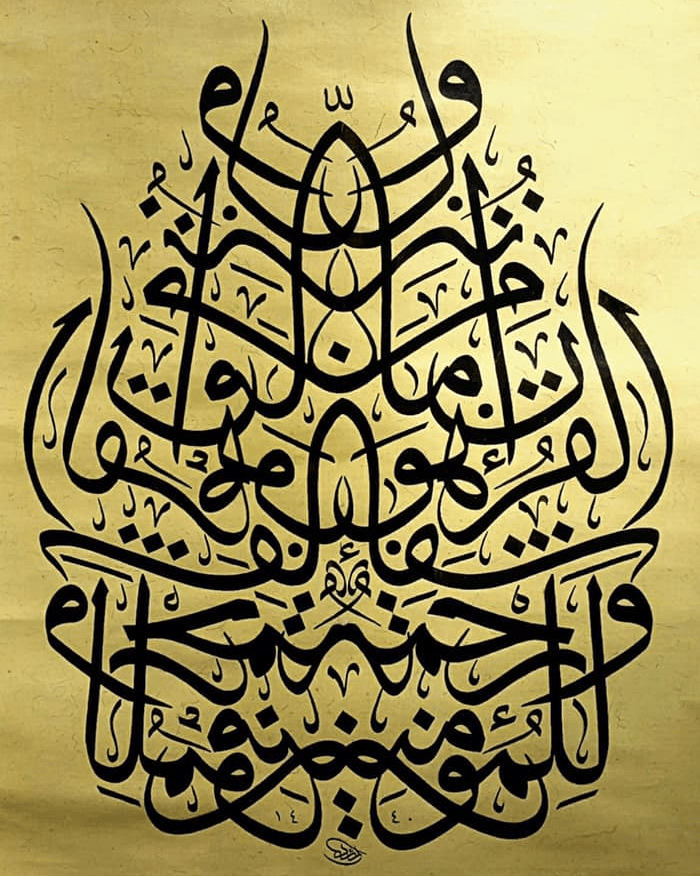
“And We send down from the Qur’an that which is a healing and a mercy to those who believe.” (Al-Isra, 17/82)
In our preceding article, we undertook a systematic examination of a first cluster of dispositions constitutive of poor moral character (al-akhlāq al-madhmūmah): impetuosity (al-ʿajalah), deception (al-khidāʿ), arrogance (al-kibr), cruelty (al-qaswah), intimidation (al-tarhīb), extravagance (al-isrāf), slander (al-buhtān), the unlawful appropriation of others’ earnings (akl amwāl al-nās bil-bāṭil), vindictiveness (al-intiqām), the belittling of others (al-iḥtiqār), the tendency toward extremes (al-ghuluww), argumentativeness (al-jidāl), cowardice (al-jubn), undue anxiety (al-qalaq), prejudice (al-taʿaṣṣub), extreme skepticism (al-shakk al-mufriṭ), perjury (shahādat al-zūr), ruthlessness, and tyranny (al-ẓulm).
The present article seeks to bring this diagnostic survey toward completion by exploring a further range of ethically pathogenic traits—among them hostility, rebellion, injustice toward others, heedlessness, sedition, mischief-making, obstinacy, indolence, the breaking of covenants, calumny, delusion, despair, dishonesty, egoism, the absence of empathy, ostentation, mendacity, materialism, and idolatry. As in the classical Islamic science of character (ʿilm al-akhlāq), each of these vices is approached not merely as a discrete behavioral fault but as a symptom of a deeper disorder of the soul (maraḍ min amrāḍ al-qalb), for which the Qurʾān and the prophetic Sunnah furnish a corresponding therapeutic remedy (ʿilāj).
1. Hostility (al-ʿAdāwah)
Hostility—rendered in the Qurʾānic lexicon as al-ʿadāwah and closely allied with al-baghḍāʾ (rancorous aversion) and al-ghayẓ (suppressed rage)—denotes a settled disposition of antagonism that expresses itself across a continuum of conduct, ranging from verbal and physical aggression to the more latent interior states of anger (al-ghaḍab) and resentment (al-ḥiqd). Its objects may be individuals or entire groups, and its roots frequently lie in perceived differences of race, religion, gender, or social station. Left unchecked, hostility escalates conflict, corrodes interpersonal bonds, undermines the psychological well-being of the individual, and destabilizes the moral cohesion of society at large.
From the standpoint of Islamic moral psychology, hostility is understood as a derivative of the irascible faculty (al-quwwah al-ghaḍabiyyah), which al-Ghazālī, in the Iḥyāʾ ʿUlūm al-Dīn, identifies as one of the soul’s constitutive powers. This faculty is not evil, it is the very energy that enables courage, the defense of justice, and ghayrah (protective zeal for what is sacred). Its pathology arises only through excess (ifrāṭ) or deficiency (tafrīṭ); hostility is precisely the corrupted excess of the irascible faculty, in which righteous indignation degenerates into indiscriminate enmity. The cure, therefore, is not the extinction of this faculty but its restoration to the balanced mean (al-iʿtidāl) through the discipline of forbearance (ḥilm).
Confronting divergent viewpoints with hostility is neither ethically defensible nor pragmatically productive. The Qurʾānic ideal counsels, in its place, the cultivation of emotional self-restraint (kaẓm al-ghayẓ), the practice of courteous discourse (al-qawl al-ḥasan), and a genuine willingness to listen and to comprehend the other’s perspective even amid disagreement. Crucially, Islamic ethics regards hostility as an acquired and therefore remediable disposition (khuluq muktasab), susceptible to correction through deliberate spiritual discipline. When hostile impulses issue in harmful conduct or significantly disrupt ordinary life, the tradition counsels recourse to a qualified moral guide (murshid or ethical counselor), who may help to identify underlying causes and prescribe practical means of restraint. It is equally important to recognize that persistent hostility may be the surface manifestation of deeper afflictions—depression, chronic anxiety, or unresolved trauma—warranting compassionate and professional attention.
The Qurʾān articulates the definitive remedy in a passage of remarkable ethical sophistication:
“The good deed and the evil deed cannot be equal. Repel (the evil) with one which is better (i.e., Allah ordered the faithful believers to be patient in times of anger, and to excuse those who treat them badly), then verily! he, between whom and you there was enmity, (will become) as though he was a close friend. But none is granted it (the above quality) except those who are patient, and none is granted it except the owner of the great portion (of the happiness in the Hereafter i.e., Paradise and this world of a high moral character).” (Fussilat, 41/34-35)
The verse establishes a transformative moral principle: the antidote to enmity is not reciprocal aggression but proactive benevolence (al-dafʿ bi-llatī hiya aḥsan). The exegetical tradition (tafsīr)—including al-Ṭabarī and al-Rāzī—observes that this reversal, whereby an adversary becomes an intimate friend (walī ḥamīm), is presented not as a naïve idealism but as a rare moral achievement reserved for those who possess the twin virtues of patience (al-ṣabr) and a substantial share of inner nobility. The prophetic tradition confirms the gravity of unrestrained hostility:
Narrated ‘Aisha (may Allah be pleased with her):
The Prophet (ﷺ) said, “The most hated person in the sight of Allah is the one who is the violent and quarrelsome person.” [1]
The Arabic al-aladd al-khaṣim denotes one whose disposition is so saturated with contentiousness that dispute becomes his second nature—an apt characterization of hostility as an entrenched vice of character rather than an isolated act.
2. Rebellion (al-Baghy / al-ʿIṣyān)
Rebellion, in the sense here intended, entails the willful confrontation of established norms, legitimate authority, or lawful regulation. The Islamic tradition designates this disposition by two closely related terms: al-baghy, denoting unjust transgression against rightful order, and al-ʿiṣyān, denoting disobedience to legitimate command. The negative moral valence attached to the rebel arises specifically from conduct that violates just law, inflicts harm upon others, or subordinates the common good to narrow self-interest.
It is essential, however, to draw the distinction the tradition itself insists upon. Islam does not sanctify every existing arrangement of power; the prophetic dictum ‘There is no obedience to the creation in disobedience to the Creator’ (lā ṭāʿata li-makhlūqin fī maʿṣiyati al-Khāliq) legitimizes—indeed obligates—principled resistance to tyranny and injustice. The rebellion condemned as a moral vice is not the conscientious refusal of oppression but al-baghy: transgression that ruptures the legitimate bonds of communal order (jamāʿah), sows discord (fitnah) and pursues destruction rather than reform. The gravity of this distinction is such that the illegitimate rending of the community’s cohesion is treated in the sources as among the most serious of social sins.
Because rebellion so understood tends toward societal instability—resting as it does upon the repudiation of rightful authority and inherited moral tradition—the tradition urges sober reflection upon the consequences of one’s actions before undertaking them (al-naẓar fī al-ʿawāqib). At the same time, rebellious energy is not intrinsically irredeemable; it can be transmuted into constructive ethical and moral commitment. Rebellious conduct frequently signals deeper grievances—experiences of oppression, inadequate representation, or being misunderstood—and where it produces significant disorder in one’s life, seeking guidance is advisable. A moral counselor may help to identify the underlying causes and to redirect this energy toward positive and constructive ends, channeling the impulse to resist into the higher work of iṣlāḥ (reform and reconciliation).
The Qurʾān sets forth the ultimate accountability attaching to disobedience against divine authority:
(Mine is) But conveyance (of the truth) from Allah and His Messages (of Islamic Monotheism), and whosoever disobeys Allah and His Messenger, then verily, for him is the Fire of Hell, he shall dwell therein forever.” (The Jinn, 72/23)
The verse frames disobedience (maʿṣiyah) not as a mere breach of social convention but as a rupture in the covenant between the human being and the divine order, carrying consequences that extend into the Hereafter. The prophetic Sunnah, in turn, condemns the recourse to violent insurrection against the community:
Narrated Abu Musa (may Allah be pleased with him):
That the Prophet (ﷺ) said: “Whoever carries weapons against us, he is not from us.” [2]
The phrase laysa minnā (‘is not of us’)—a recurrent prophetic formula of severe censure—signals that the armed rebel who threatens the peace and lives of the community has, by that very act, placed himself outside the ethical body of the believing community. The classical jurists (fuqahāʾ) drew upon such texts in developing the detailed juridical treatment of al-bughāh (unlawful rebels), underscoring that the preservation of communal order and the sanctity of life stand among the higher objectives of the Sacred Law (maqāṣid al-sharīʿah).
3. Injustice Toward Others (al-Ẓulm)
Injustice toward others is most comprehensively expressed in the Qurʾānic concept of al-ẓulm. Although the term is often translated simply as ‘wrongdoing’ or ‘oppression,’ its semantic range is considerably broader. It denotes the violation of a right, the infliction of harm, the deprivation of what is due, and—within the classical ethical vocabulary—the placing of something outside its proper order or measure. Injustice may therefore be enacted through overt violence and discrimination, but also through humiliation, exploitation, arbitrary exclusion, neglect, partiality in judgment, or the withholding of assistance from those whose rights have been violated.
The Islamic conception of justice (al-ʿadl) is correspondingly more demanding than the absence of direct physical harm. It requires that each person be treated as a bearer of inviolable dignity and legitimate rights, and that social relations be governed by fairness, proportionality, and trust. The Qurʾān repeatedly commands believers to uphold justice even when doing so conflicts with personal interest, family loyalty, or hostility toward another party: ‘O you who believe! Stand firmly for justice, as witnesses for Allah, even if it be against yourselves, or your parents and relatives’ (al-Nisāʾ, 4/135). In another foundational directive, it states: ‘Indeed, Allah commands justice, excellence, and giving to relatives, and He forbids immorality, wrongdoing, and transgression’ (al-Naḥl, 16/90). Justice is thus not merely a political or legal ideal; it is an act of religious obedience and a central manifestation of moral responsibility.
Injustice damages both its immediate victims and the moral ecology of the community. For the victim, it may produce material deprivation, humiliation, insecurity, psychological injury, and a loss of trust in social institutions. At the collective level, repeated injustice normalizes discrimination, cultivates prejudice, weakens solidarity, and creates conditions in which further abuses become easier to justify. The Qurʾānic language of ẓulm also prevents a narrow understanding of injustice as an isolated interpersonal fault. A person may participate in injustice through direct action, through silence in the face of wrongdoing, or using social and institutional power without accountability. The ethical task is therefore not only to avoid harming others but also, within one’s ability and without creating greater harm, to resist and remedy oppression.
The moral roots of injustice include ignorance, tribal or ideological partiality, arrogance, resentment, fear, and the failure to recognize the humanity of the other. Prejudice often becomes the cognitive framework through which injustice is rationalized, while a deficiency of empathy makes the suffering of the victim appear insignificant. Islamic moral education addresses these roots through taqwā (consciousness of God), muraqabah (awareness that one’s conduct is subject to divine observation), muḥāsabah (self-accounting), and the cultivation of raḥmah (compassion). The believer is called to examine inherited assumptions, distinguish evidence from stereotype, and judge each person according to truth rather than group identity or personal preference.
The Qurʾān presents the fabrication of falsehood against God as the most extreme form of wrongdoing:
“And who does more wrong than he who invents a lie against Allah? Such will be brought before their Lord, and the witnesses will say, ‘These are the ones who lied against their Lord!’ No doubt! the curse of Allah is on the Zalimun (polytheists, wrong-doers, oppressors, etc.)” (Hud, 11/18)
The immediate subject of this verse is not every form of interpersonal injustice in an undifferentiated sense; it specifically condemns the grave epistemic and theological injustice of attributing falsehood to Allah. Nevertheless, the verse establishes an important principle for the ethics of wrongdoing: injustice is not merely a private failure of sympathy but a violation of truth and of the proper order established by God. Its concluding designation of the perpetrators as al-ẓālimūn situates false testimony, distortion, and the abuse of religious authority within the wider moral category of ẓulm. The verse therefore warns that injustice can operate through speech and representation as well as through physical or economic harm. The prophetic Sunnah supplies a practical account of moral solidarity.
Anas ibn Mālik (may Allah be pleased with him) narrated that the Messenger of Allah (ﷺ) said:
Allah’s Messenger (ﷺ) said, “Help your brother, whether he is an oppressor or he is an oppressed one.” People asked, “O Allah’s Messenger (ﷺ)! It is all right to help him if he is oppressed, but how should we help him if he is an oppressor?” The Prophet (ﷺ) said, “By preventing him from oppressing others.” [3]
This prophetic formulation is ethically significant because it rejects two opposite errors: abandoning the oppressed and confusing loyalty with complicity. To help the oppressed is to protect the victim, restore the violated right, and seek an appropriate means of redress. To help the oppressor is not to defend his conduct but to restrain him from further wrongdoing and thereby prevent the multiplication of his sin. The hadith consequently transforms justice into a form of responsible solidarity: authentic concern for the wrongdoer includes interrupting the action through which he harms others.
In practical terms, the correction of unjust behavior begins with recognition and accountability. The individual must identify the persons or groups harmed, distinguish intention from effect, cease the harmful conduct, restore rights where possible, apologize without evasion, and accept legitimate consequences. Where the matter involves abuse, discrimination, exploitation, or a threat to safety, the protection of the victim must take precedence over the wrongdoer’s desire to preserve his reputation. A trusted scholar, moral counselor, or qualified mental-health professional may assist in identifying the psychological and social patterns that sustain injustice; however, counseling must never be used to excuse abuse or to shift responsibility from the perpetrator to the victim. Moral reform in the Islamic sense requires tawbah (repentance), iṣlāḥ (reparation and reform), and a demonstrable change in conduct—not merely regret expressed in words.
4. Heedlessness (al-Ghaflah)
Heedlessness is more than an occasional lapse of attention. In the Qurʾānic and Islamic ethical vocabulary, al-ghaflah denotes a persistent failure to remain inwardly attentive to truth, moral responsibility, and the consequences of one’s actions. It is a form of spiritual and ethical inattentiveness in which the faculties of perception may remain physically intact while the heart fails to apprehend the significance of what it encounters. A heedless person may see an injustice without recognizing its moral seriousness, hearing admonition without allowing it to transform conduct, or act impulsively without considering the effects of that action upon oneself and others.
This broader meaning should not be confusing with every instance of ordinary forgetfulness, fatigue, or cognitive distraction. Human beings are fallible, and Islamic law itself recognizes forgetfulness and error as distinct from deliberate transgression. Ghaflah becomes a moral defect when inattention develops into a settled disposition—when a person repeatedly neglects duties, refuses self-examination, ignores reliable counsel, or treats foreseeable consequences as though they did not matter. It can manifest as carelessness in speech, negligence in entrusted responsibilities, indifference to another person’s suffering, or a habitual absorption in amusement and worldly preoccupation.
The Qurʾān describes the spiritual structure of heedlessness in powerful sensory imagery:
“And surely, We have created many of the jinns and mankind for Hell. They have hearts wherewith they understand not, they have eyes wherewith they see not, and they have ears wherewith they hear not (the truth). They are like cattle, nay even more astray; those! They are the heedless ones.” (Al-A’râf, 7/179)
The verse does not condemn the possession of human faculties; it condemns their moral non-use. The heart (qalb) is mentioned as the locus of understanding, while sight and hearing are treated as means through which signs and admonition should be received. In the exegetical tradition, the verse is therefore read as a warning against the reduction of perception to mere biological sensation. True seeing and hearing involve recognition, reflection, and responsive action. A person who possesses information but refuses its ethical implications may be intellectually informed yet spiritually heedless.
Heedlessness also has a temporal dimension. It interrupts the connection between present action and future consequences. The heedless person is absorbed by the immediate impulse, pleasure, grievance, or distraction and fails to consider the ʿāqibah—the eventual outcome of the choice. This is why Islamic ethical training places such emphasis upon tafakkur (reflective contemplation), tadabbur (deliberate engagement with meaning), and muḥāsabah. These practices restore moral attention by requiring the individual to ask: What am I doing? Why am I doing it? Whom may it affect? What will remain after the moment has passed? And how will I answer for it before God? The prophetic tradition connects the quality of one’s supplication with the presence of the heart.
Abū Hurayrah (may Allah be pleased with him) narrated that the Messenger of Allah (ﷺ) said:
“Call upon Allah while being certain of being answered and know that Allah does not respond to a supplication from the heart of one heedless and occupied by play.” [4]
This hadith should not be reduced to a mechanical formula suggesting that every delayed supplication is evidence of heedlessness or divine rejection. Rather, it teaches that duʿāʾ is an act of conscious relationship with God, not merely the utterance of words while the heart remains absorbed in distraction. Certainty of response (al-yaqīn bi-l-ijābah) does not mean prescribing the exact form or timing of the answer; it means approaching Allah with trust, sincerity, humility, and attentiveness. The hadith thus presents presence of heart as a condition of spiritual seriousness and as an antidote to the fragmentation produced by heedlessness.
The causes of heedlessness may be spiritual, psychological, social, or situational. Persistent stress, anxiety, exhaustion, grief, trauma, and other mental-health difficulties can impair attention and self-regulation; excessive digital stimulation and compulsive entertainment can likewise habituate the mind to constant distraction. These factors should be acknowledged compassionately without turning them into excuses for preventable harm. Where inattentiveness substantially disrupts daily functioning or produces danger to oneself or others, consultation with a qualified mental-health professional is appropriate. Religious guidance and professional care need not be treated as alternatives: spiritual practice may strengthen meaning and accountability, while clinical support may address conditions that exceed the scope of moral instruction alone.
The Islamic remedy for heedlessness is a disciplined recovery of attention. Regular remembrance (dhikr) reorients the heart toward God; recitation and contemplation of the Qurʾān deepen moral perception; prayer punctuates the day with deliberate moments of presence; and muḥāsabah converts experience into ethical learning. In practical conduct, a person can cultivate a pause between impulse and action, verify information before repeating it, listen without preparing an immediate response, and review the foreseeable consequences of important decisions. Keeping promises, fulfilling trusts, and attending carefully to the rights of others are not peripheral exercises: they are concrete forms of overcoming ghaflah.
Moral awareness is therefore not a fixed psychological endowment but a habit that can be strengthened through repeated practice. The heedless heart is not cured by anxiety or self-condemnation; it is awakened through truthful self-recognition, remembrance, reflection, accountability, and compassionate perseverance. In this sense, the Qurʾānic warning and the prophetic counsel converge genuine moral life begins when the human being learns not merely to look, hear, and speak, but to perceive the significance of reality and respond to it with responsibility before Allah and justice toward creation.
5. Sedition (al-Fitnah)
Sedition, in its ordinary legal sense, refers to speech or conduct intended to incite rebellion, disorder, or armed resistance against a lawful authority. It may include the incitement of violence, the dissemination of destabilizing propaganda, or the deliberate encouragement of the overthrow of legitimate governance. In many legal systems it is treated as a grave offense, precisely because it threatens the conditions of public order upon which the safety, rights, and livelihoods of ordinary people depend.
In the Islamic ethical and juristic tradition, the concept that most closely corresponds to sedition is al-fitnah. The term is semantically rich: its root meaning relates to the testing of gold by fire, and from this it extends to trial, temptation, discord, civil strife, and the kind of social convulsion in which truth becomes difficult to discern, and the innocent are swept into harm. Classical scholars used fitnah especially to describe periods of internal conflict within the community (al-ummah)—not merely political dissent, but the collapse of moral clarity that accompanies violent factionalism. It is this dimension that gives the Islamic treatment of sedition its distinctive character: the primary concern is not the mere fact of disagreement with authority, but the unleashing of chaos in which lives, honor, and religion are endangered.
A crucial distinction must be preserved here, one that the Islamic tradition itself insists upon. The condemnation of fitnah is not a blanket prohibition of all criticism, reform, or the peaceful pursuit of justice. Islam obligates the enjoining of good and the forbidding of wrong (al-amr bi-l-maʿrūf wa-l-nahy ʿan al-munkar), and it recognizes the legitimacy of counsel (naṣīḥah) directed even toward those in authority. What it condemns is the incitement of bloodshed, the fabrication and spread of destabilizing falsehood, and the reckless provocation of violence that harms the innocent. Peaceful, truthful, and lawful advocacy for justice belongs to the category of righteous conduct; the deliberate manufacture of discord and violent insurrection belongs to the category of fitnah. The ethical task is to hold firmly to the first without collapsing into the second.
The Qurʾān addresses the internal machinery of sedition—the interplay of hypocrisy, deceit, and the manipulation of information:
“O Messenger (Muhammad SAW)! Let not those who hurry to fall into disbelief grieve you, of such who say: ‘We believe’ with their mouths but their hearts have no faith. And of the Jews are men who listen much and eagerly to lies – listen to others who have not come to you. They change the words from their places; they say, ‘If you are given this, take it, but if you are not given this, then beware!’ And whomsoever Allah wants to put in Al-Fitnah (sedition, error, because he rejects the Faith), you can do nothing for him against Allah. Those are the ones whose hearts Allah does not want to purify (from disbelief and hypocrisy); for them, there is a disgrace in this world, and in the Hereafter a great torment.” (Al-Ma’idah, 5/41)
The verse is instructive because it locates the root of sedition not in mere political grievance but in a corrupted inner condition: the divergence between the tongue and the heart, and the willful distortion of words ‘beyond their proper places’ (yuḥarrifūna al-kalima min baʿdi mawāḍiʿihi). This is a precise diagnosis of one of sedition’s central instruments—the manipulation of language and meaning to inflame and mislead. The verse’s reference to fitnah as something Allah may ‘intend’ for those who reject purification should be read within its theological register: it describes the consequence of a heart that has persistently refused truth, not a divine arbitrariness. Its ethical lesson is that sedition begins inwardly, in a disposition of deceit, before it manifests outwardly in disorder.
The prophetic tradition offers a striking counsel of restraint during periods of civil strife. Abū Hurayrah (may Allah be pleased with him) narrated that the Messenger of Allah (ﷺ) said:
Allah’s Messenger (ﷺ) said, “There will be seditions (in the future) during which a sitting person will be better than a standing one, and the standing one will be better than the walking one, and the walking one will be better than the running one, and whoever will expose himself to these afflictions, they will destroy him. So, whoever can find a place of protection or refuge from them, should take shelter in it.” [5]
The graded imagery—sitting, standing, walking, running—describes degrees of involvement in indiscriminate strife, and the hadith counsels progressive withdrawal from chaos in which right and wrong have become indistinguishable, and participation serves only to multiply harm. It is essential, however, not to misread this counsel as a mandate for passivity in the face of clear injustice. The classical commentators understood the hadith to concern the specific condition of fitnah—blind factional conflict in which the combatants themselves cannot identify a just cause—rather than the lawful defense of the oppressed or the peaceful pursuit of legitimate reform. Its guidance is prudential: when the fire of indiscriminate discord spreads, the believer is to seek refuge in restraint, wisdom, and non-participation in bloodshed, rather than to add fuel to a conflagration that consumes the innocent.
In practical ethical terms, the avoidance of sedition requires the disciplined use of speech, the verification of information before its transmission, the refusal to spread inflammatory rumor, and the channeling of grievance into lawful and peaceful means of redress. The one who mistakes the fomenting of chaos for the pursuit of justice—who becomes, in effect, a muftin (sower of discord)—harms both himself and his community. The Qurʾānic and prophetic guidance together direct the believer toward a demanding balance: to speak truth and resist wrong, yet never to become an instrument of the very disorder that destroys the vulnerable.
6. Mischief-Making (al-Ifsād fī al-Arḍ)
Mischief-making, in the sense addressed here, extends well beyond harmless playfulness. In the Qurʾānic vocabulary it corresponds to al-fasād—corruption, spoilage, and the disruption of right order—and, in its active form, to al-ifsād fī al-arḍ, ‘the spreading of corruption in the land.’ While the English term ‘mischief’ may suggest minor pranks, the Islamic concept designates any conduct that damages the moral, social, or physical order that God has established: from vandalism, rule-breaking, and the deliberate creation of conflict, to the more serious forms of social sabotage that undermine trust, safety, and communal well-being.
The behavior may manifest in diverse forms—verbal provocation, physical aggression, the destruction of property, the flouting of legitimate norms, or the persistent generation of discord among people. What unites these manifestations, from the Islamic ethical standpoint, is that they represent a disordering of relationships that were meant to be governed by justice, cooperation, and mutual benefit. The person who habitually creates trouble (al-mufsid) is contrasted throughout the Qurʾān with the one who sets things right and reconciles (al-muṣliḥ), and this opposition between corruption and reform (fasād and iṣlāḥ) forms one of the central moral axes of Qurʾānic ethics.
The Qurʾān offers a penetrating psychological portrait of the mischief-maker who is blind to his own corruption:
“And when it is said to them: ‘Make not mischief on the earth,’ they say: ‘We are only peacemakers.’ Verily! They are the ones who make mischief, but they perceive not.” (Al-Baqarah, 2/11-12)
The moral acuity of this passage lies in its diagnosis of self-deception. The verse describes not the cynical wrongdoer who knows he does evil, but the far more insidious figure who genuinely believes himself to be a reformer while spreading corruption. The concluding phrase—wa-lākin lā yashʿurūn, ‘but they perceive it not’—identifies the absence of self-awareness as the very engine of the harm. This is a profound ethical insight: the most dangerous mischief is often committed under the banner of good intentions, by those who have lost the capacity to see the effects of their own conduct. The remedy the tradition prescribes is therefore inward as much as outward: honest self-examination (muḥāsabah), openness to correction, and the humility to measure one’s actions by their consequences rather than by one’s own estimation of one’s motives.
Mischief-making may also signal underlying conditions that merit attention rather than mere condemnation. In some cases, it arises from inattention, boredom, unmet emotional needs, or underdeveloped social skills; in more serious cases it may reflect deeper behavioral or psychological difficulties. Where mischievous conduct escalates into genuine harm, the counsel of a qualified specialist—alongside moral and spiritual guidance—may help to identify root causes and to develop constructive alternatives. Islamic ethical formation approaches this not through humiliation but through the cultivation of iṣlāḥ: redirecting disruptive energy toward reconciliation, useful work, and the repair of what has been damaged. The prophetic tradition connects the visible quality of a person’s deeds to their hidden foundation.
Muʿāwiyah ibn Abī Sufyān (may Allah be pleased with him) reported that he heard the Messenger of Allah (ﷺ) say:
I heard the Messenger of Allah (ﷺ) say: “Deeds are like vessels. If the lower part is good then the upper part will be good, and if the lower part is bad then the upper part will be bad.” [6]
The image is illuminating for the ethics of mischief-making. A vessel whose base is unsound cannot hold what is poured into it, however fair its rim may appear; likewise, conduct built upon a corrupt inner foundation—concealed malice, self-deception, or contempt for others—will ultimately reveal its corruption in its outward effects, regardless of the reassuring language in which it is clothed. The hadith thus reinforces the Qurʾānic teaching of al-Baqarah: outward claims of reform cannot redeem an inwardly corrupt intention. Genuine moral integrity requires soundness at the foundation—a sincere inner orientation toward iṣlāḥ—from which alone sound and beneficial action can proceed.
7. Stubbornness (al-ʿInād)
Stubbornness is characterized by a rigid and inflexible attachment to one’s own ideas, opinions, or intended course of action, maintained even in the face of contrary evidence or reasoned counsel. In the Islamic ethical vocabulary this disposition is designated by al-ʿinād—obstinate refusal—and its more theologically charged relatives, al-ʿutuww (arrogant defiance) and al-liḥāḥ fī al-bāṭil (persistence in falsehood). At its core, stubbornness is the settled unwillingness to revise a position when truth requires revision, and it obstructs the individual’s capacity to reassess, to absorb new information, and to grow. Left unexamined, it breeds disputes in personal and professional life and quietly arrests the process of moral and intellectual development.
The Islamic tradition draws a careful and essential distinction here—one that mirrors al-Ghazālī’s broader teaching that virtue lies in the balanced mean (al-iʿtidāl) between excess and deficiency. Firm conviction (al-thabāt), steadfastness upon truth (al-istiqāmah), and resolute determination (al-ʿazm) are praiseworthy virtues; the Qurʾān repeatedly commands the believer to hold firmly to what is right and not to waver under pressure. Stubbornness is the corruption of these virtues through excess: it is steadfastness detached from truth, conviction that has hardened into an incapacity to listen. The decisive difference lies in the object of firmness. To be immovable upon established truth is istiqāmah; to be immovable upon one’s own opinion merely because it is one’s own—regardless of evidence—is ʿinād. The former is a mark of faith; the latter is a defect of character rooted in the ego (al-nafs).
It is therefore both legitimate and commendable to hold firmly to sound principles and well-grounded convictions. What the tradition warns against is the closing of the heart and mind against correction: the refusal to consider another’s perspective, to weigh new evidence, or to acknowledge one’s own error. Openness to truth from whatever source it comes is itself an Islamic virtue, expressed in the well-known ethical maxim that wisdom (al-ḥikmah) is the lost property of the believer, to be taken up wherever it is found. Genuine strength of character consists not in never changing one’s position, but in changing it when truth demands—and holding firm when truth demands that too.
The Qurʾān presents obstinate rejection as a defining trait of those who refuse divine guidance:
(And it will be said): “Both of you throw (Order from Allah to the two angels) into Hell, every stubborn disbeliever (in the Oneness of Allah, in His Messengers, etc.), hinderer of good, transgressor, doubter, who set up another ilah (god) with Allah, then (both of you) cast him in the severe torment.” (Qâf, 50/24-26)
The verse is significant for its diagnostic sequence. The Qurʾānic term ʿanīd—obstinate, defiant—is paired with a cascade of related vices: the withholding of good (mannāʿ li-l-khayr), transgression of limits (muʿtadin), and corrosive doubt (murīb). The exegetical tradition observes that obstinacy is presented here not as an isolated fault but as the disposition from which other moral failures flow: the one who has hardened himself against truth becomes, by that very hardening, a preventer of good and a transgressor. Stubbornness in matters of faith is thus portrayed as a spiritual pathology—a willful shutting of the self against the reception of guidance—whose gravity lies precisely in its refusal of the possibility of correction.
The prophetic model offers the living antidote to this vice in the person of the Prophet (ﷺ) himself. ʿAbdullāh ibn Busr (may Allah be pleased with him) reported:
“I gave the Prophet (ﷺ) a gift of a sheep, and the Messenger of Allah (ﷺ) sat on his knees to eat. A Bedouin said: ‘What is this sitting?’ He said: ‘Allah has made me a humble and generous slave (of Allah) and has not rendered me arrogant and stubborn.’ [7]
The hadith is illuminating because it links stubbornness (ʿinād) directly with tyranny (jabbāriyyah) and opposes both to humble servanthood (ʿubūdiyyah). The Prophet’s simple posture of eating—sitting humbly upon his knees rather than reclining in the manner of the proud—becomes an occasion to articulate a whole ethic of character: the servant of God is defined by humility and receptivity, not by the arrogant rigidity of the jabbār ʿanīd. The pairing is instructive: obstinacy is not merely an intellectual failing but a moral posture akin to domineering pride, while its cure is the cultivation of humility (tawāḍuʿ) before both God and truth.
In practical terms, the remedy for stubbornness begins with the recognition that being corrected is not humiliation but a gift. The individual is counseled to cultivate the habit of genuinely listening before responding, to distinguish attachment to truth from attachment to ego, to seek out perspectives that challenge one’s own, and to treat the discovery of one’s own error as an occasion for gratitude rather than shame. Consultation (shūrā) is an Islamic principle precisely because it protects against the blindness of the isolated, self-certain mind. The one who learns to say ‘I was mistaken’ has not weakened his character but strengthened it, for he has subordinated the nafs to the truth.
8. Laziness (al-Kasal)
Laziness manifests as a persistent reluctance or unwillingness to undertake beneficial physical or mental effort. In the Islamic ethical vocabulary, it is designated by al-kasal—the very term the Prophet (ﷺ) sought refuge from—and it is closely associated with al-tawānī (slackness) and al-taswīf (habitual procrastination, the endless postponement to ‘later’). It is frequently accompanied by a deficit of motivation, chronic delay, and resistance to responsibility, and its consequences can be seriously harmful: substandard performance in work and study, financial difficulty, neglected obligations, and the stagnation of personal and spiritual growth.
A careful distinction must be preserved at the outset; one the tradition itself observes. Laziness as a moral defect is not the same as legitimate rest, nor is it the same as the incapacity produced by illness, exhaustion, or genuine psychological difficulty. Islam affirms the body’s right to rest and the necessity of restoration; the Prophet (ﷺ) himself counseled moderation and warned against the kind of overexertion that leads to burnout and abandonment of good works. Kasal becomes a vice specifically when a person capable of beneficial action habitually withholds that effort out of inertia, indulgence, or aversion to responsibility—when the will, not the body, is the obstacle. This distinction matters ethically and pastorally: it guards against both the self-deception that dresses idleness as ‘self-care’ and the harsh misjudgment that condemns as lazy a person struggling with depression or genuine incapacity.
Overcoming inertia is essential to the pursuit of one’s goals, and the first step is honest diagnosis: identifying whether sluggishness arises from an absence of motivation, a loss of meaning, a sense of being overwhelmed, or an underlying condition. Once identified, these causes are to be addressed actively rather than merely lamented. It is important to recognize, moreover, that persistent laziness may be a symptom of deeper difficulties, depression, anxiety, or low self-esteem—that lie beyond the reach of mere exhortation. Where such conditions significantly disrupt daily functioning, seeking qualified professional help is not a failure of faith but a legitimate and often necessary means of care, fully compatible with spiritual striving.
The Qurʾān identifies spiritual laziness as a symptom of a deeper deficiency of faith, particularly in the context of worship:
“And nothing prevents their contributions from being accepted from them except that they disbelieved in Allah and His Messenger (Muhammad SAW); and that they came not to As-Salat (the prayer) except in a lazy state; and that they offer not contributions but unwillingly.” (At-Tawbah, 9/54)
The verse is diagnostically precise. It locates laziness in worship (al-kasal fī al-ṣalāh) not as a mere behavioral habit but as an outward manifestation of an inward condition—here, the absence of living faith and sincere intention. Approaching prayer kusālā, in a state of listless reluctance, is presented as symptomatic of a heart that has not truly turned toward God. The exegetical tradition draws from this a broader principle: outward sluggishness in righteous action frequently mirrors an inner deficit of conviction and love. The remedy for spiritual laziness therefore cannot be purely mechanical; it requires the renewal of intention (niyyah), the recovery of meaning, and the rekindling of the heart’s attachment to what it is called to do.
The prophetic Sunnah supplies both the recognition of laziness as a genuine spiritual affliction and the supplication for deliverance from it. Anas ibn Mālik (may Allah be pleased with him) narrated that he served the Prophet (ﷺ), and that he often heard him say:
“O Allah! I seek refuge with You from, having worries sadness, helplessness, laziness, miserliness, cowardice, being heavily in debt, and from being overpowered by other persons unjustly.” [8]
The placement of laziness within this litany is deeply instructive. The Prophet (ﷺ) pairs al-kasal (laziness—the failure of will despite capacity) with al-ʿajz (incapacity—the absence of the means), thereby distinguishing the two even as he seeks refuge from both. He further situates laziness among a cluster of debilitating conditions—anxiety, grief, miserliness, cowardice, indebtedness, subjugation—that together sketch a portrait of the disempowered and diminished soul. This framing reveals the Islamic understanding of laziness not as a trivial fault but as a spiritual affliction that saps the believer’s capacity for good, worthy of being warded off through both supplication and effort. That the Prophet (ﷺ) sought refuge from it in prayer signals, too, that its cure is not effort alone, but effort joined to divine assistance (tawfīq).
In practical terms, the tradition’s remedy is a disciplined and compassionate program of gradual reactivation. The individual is counseled to set attainable goals and to break large tasks into small, manageable steps; to build a consistent routine and formulate a concrete plan of action; to find ways of making the work meaningful and engaging; and to acknowledge and give thanks for progress and accomplishment. To these practical measures the Islamic tradition adds the spiritual dimension: the renewal of intention, reliance upon God (tawakkul) joined to genuine effort (al-akhdh bi-l-asbāb), and the supplication of the Prophet (ﷺ) himself. Laziness, understood as a habit, can be unlearned through persistent practice; understood as a spiritual condition, it is healed through the reunion of the heart with meaning, purpose, and trust in God.
9. Unfulfilled Promises (Khulf al-Waʿd wa-Naqḍ al-ʿAhd)
The failure to fulfill promises is the breaking of commitments and agreements freely made with others. In the Islamic ethical vocabulary this defect is designated by two related terms: khulf al-waʿd—the breaking of a promise—and, in its graver form, naqḍ al-ʿahd, the violation of a solemn covenant. Both represent a rupture of trust (al-amānah), and trust, in the Islamic conception, is not a merely social convenience but a sacred deposit. To make a commitment is to bind oneself; to break it without necessity is to betray the one who relied upon that binding, damaging relationship, eroding one’s credibility, and staining one’s reputation and moral standing.
The Islamic tradition treats the honoring of one’s word as an essential component of faith itself, and this elevates the ethical weight of the matter considerably. A promise is not a casual utterance but the assumption of a moral obligation, and it therefore demands careful reflection before it is given. The believer is counseled to weigh a commitment before making it—to promise only what one reasonably intends and can perform. Where genuine circumstances make fulfillment impossible, the tradition requires prompt and honest disclosure of the affected party and a good-faith effort to find an alternative remedy. This ethic distinguishes the person of integrity, who suffers the discomfort of honesty, from the person who allows another to rely upon a commitment he has silently abandoned.
The failure to keep promises often signals deeper patterns worth examining poor time management, inadequate planning, an inflated readiness to please others by promising more than one can deliver, or—most seriously—a genuine deficit of integrity (ṣidq). A trusted scholar or moral counselor may assist in identifying which of these roots is operative and in developing practical means of correction. Because the breaking of promises is frequently a habit rather than a single lapse, it can be unlearned through consistent practice: setting realistic commitments, planning thoughtfully, and cultivating the settled disposition of one whose word can be relied upon.
The Qurʾān establishes the fulfillment of covenants as a matter of ultimate accountability:
“And fulfill (every) covenant. Verily! The covenant will be questioned.” (Al-Isra, 17/34)
The verse’s concluding clause—inna al-ʿahda kāna masʾūlā, ‘the covenant will be questioned’—is ethically decisive. It personifies the covenant itself as something that will be brought forward and interrogated on the Day of Judgment, transforming promise-keeping from a matter of mere social reputation into a matter of divine accountability. The exegetical tradition understands this to encompass covenants made with God (such as the obligations of faith) and covenants made among human beings alike; both are subject to the same ultimate questioning. The verse thereby situates the keeping of one’s word within the highest register of moral seriousness: it is not merely that others will remember a broken promise, but that one will answer for it before God.
The prophetic Sunnah renders the gravity of this matter unmistakable by numbering promise-breaking among the defining marks of hypocrisy. Abū Hurayrah (may Allah be pleased with him) narrated that the Prophet (ﷺ) said:
The Prophet (ﷺ) said, “The signs of a hypocrite are three:
1. Whenever he speaks, he tells a lie.
2. Whenever he promises, he always breaks it (his promise).
3. If you trust him, he proves to be dishonest. (If you keep something as a trust with him, he will not return it.)” [9]
The hadith is of the highest evidentiary rank (muttafaq ʿalayh) and its ethical import is severe. By classifying habitual promise-breaking among the three hallmarks of nifāq (hypocrisy), the Prophet (ﷺ) removes it from the category of minor social failings and places it among the gravest of character defects—those that signal a fundamental incongruity between a person’s outward profession and inner reality. The classical scholars were careful to distinguish, however, between the hypocrisy of creed (nifāq al-iʿtiqād), which expels one from faith, and the hypocrisy of conduct (nifāq al-ʿamal), which these three signs describe: a believer who habitually breaks promises does not thereby leave Islam, but he has taken on a trait of the hypocrites and stands in grave spiritual danger. The hadith thus functions as an urgent moral warning: fidelity to one’s word is not optional refinement but a test of the integrity of one’s faith.
10. Backbiting and Gossip (al-Ghībah wa-l-Namīmah)
Backbiting—speaking ill of another person in his absence—is among the most explicitly and severely condemned vices in the Islamic ethical tradition. It is designated by the term al-ghībah, and its close companion al-namīmah (talebearing, the carrying of harmful speech between people to sow discord) is treated with comparable gravity. The consequences of ghībah are extensive: it corrodes relationships, cultivates an unfavorable reputation for the one who indulges in it, inflicts stress and injury upon those spoken about, and fosters an atmosphere of mistrust and toxicity within a community. Where it involves the spreading of falsehood, it compounds backbiting with slander (buhtān) and may incur consequences graver still.
A distinctive feature of the Islamic treatment of backbiting is its precise definition, which does not depend upon the falsity of what is said. This is the crucial point that sets the Islamic conception apart from the ordinary understanding of gossip as merely the spreading of rumors. In the Islamic framework, ghībah is the mention of a person, in his absence, in a manner he would dislike—even when what is said is entirely true. If the statement is false, it ceases to be mere backbiting and becomes the still greater sin of slander (buhtān). The vice, therefore, lies not primarily in dishonesty but in the violation of another’s honor and dignity behind his back, betrayal made worse, not excused, by the fact that the victim is absent and unable to respond.
Speaking ill of someone in his absence is, in essence, the avoidance of the honest and courageous path of addressing concerns directly with the person involved. It is a form of moral cowardice as much as unkindness: it undermines trust and relationships while sparing the speaker the discomfort of candor. The Islamic ethic counsels the opposite disposition—that where there is a genuine grievance or concern, it be raised respectfully and directly with the person concerned or otherwise left unspoken. The tangible harms of backbiting are considerable: once discovered, it makes the rebuilding of trust and the repair of the relationship formidably difficult; it costs the backbiter his credibility and the respect of others, who reasonably conclude that one who speaks ill of the absent will speak ill of them too; it leads to social isolation, as people withdraw from those they deem untrustworthy; and in professional settings it poisons the atmosphere and obstructs the cooperation upon which good work depends.
The Qurʾān condemns backbiting with an image of extraordinary force:
“O you who believe! Avoid any suspicions, indeed some suspicions are sins. And spy not, neither backbite one another. Would one of you like to eat the flesh of his dead brother? You would hate it (so hate backbiting). And fear Allah. Verily, Allah is the One Who accepts repentance, Most Merciful.” (Al-Hujurat, 49/12)
The verse’s metaphor—the consumption of the flesh of one’s dead brother—is among the most vivid in the entire Qurʾān, and its rhetorical construction is deliberate. To speak ill of the absent is likened to devouring the flesh of a brother who is dead: dead, because he is absent and cannot defend himself; a brother, because the bond of faith and humanity binds the two; and the act one of cannibalistic violation, to evoke instinctive revulsion. The exegetes note that the verse first forbids the internal root (excessive suspicion, ẓann), then the investigative extension of that suspicion (spying, tajassus), and finally its verbal expression (backbiting, ghībah)—tracing the sin from the heart to the eye to the tongue. Its conclusion, mentioning God’s readiness to accept repentance, holds open the door of return for the one who recognizes the enormity of what he has done.
The prophetic Sunnah supplies the precise juristic definition that has governed the Islamic understanding of this vice ever since. Abū Hurayrah (may Allah be pleased with him) reported that the Messenger of Allah (ﷺ) said:
“Do you know what is backbiting?” They (the Companions) said: “Allah and His Messenger know best.” Thereupon he (the Holy Prophet) said: “Backbiting implies you are talking about your brother in a manner which he does not like.” It was said to him: “What is your opinion about this that if I find (that failing) in my brother which I made a mention of?” He said: “If (that failing) is found (in him) what you assert, you are backbiting him, and if that is not in him it is a slander.” [10]
This hadith is the foundational text for the Islamic definition of ghībah, and its significance lies in the Prophet’s explicit response to the natural objection: but what if it is true? His answer forecloses the most common self-justification of the backbiter—that he is ‘only telling the truth.’ Truth does not license the violation of another’s honor; on the contrary, mentioning a true fault behind a person’s back is the very definition of backbiting, while mentioning a false one is the compounded sin of slander. The classical scholars, most notably al-Nawawī in his al-Adhkār and al-Ghazālī in the Iḥyāʾ, elaborated upon this hadith at length, identifying the limited and carefully bounded exceptions in which mentioning another’s fault is permitted—such as seeking redress from a wrongdoer before a judge, warning a person of genuine harm, seeking a religious ruling, or identifying someone by a known characteristic without intent to disparage. Outside such necessities, the ethic is one of restraint of the tongue and protection of the honor of the absent.
The remedy for backbiting, in the Islamic tradition, is both preventive and restorative. Preventively, it requires the disciplined guarding of the tongue (ḥifẓ al-lisān), the assumption of good opinion regarding others (ḥusn al-ẓann), and the redirection of attention from others’ faults to one’s own (al-ishtighāl bi-ʿaybi al-nafs). Restoratively, where backbiting has occurred, the tradition calls for sincere repentance to God, the cessation of the harmful speech, and—according to many scholars—the seeking of pardon from the one wronged were doing so will not itself produce greater harm. In this way the Qurʾānic warning and the prophetic definition together establish an ethic of speech in which the honor of every person, present or absent, is held inviolable.
11. Delusion and Disordered Perception (al-Wahm and al-Tawahhum)
Delusional thinking refers, in the clinical sense, to fixed beliefs that remain resistant to compelling contrary evidence and that are substantially inconsistent with the person’s cultural and social context. Such beliefs may take the form of an exaggerated conviction in one’s exceptional powers or status, an unshakable belief that one is being persecuted, or the false attribution of meaning and intention to events that are not occurring in the manner perceived. Delusions are not simply mistaken opinions, ordinary religious convictions, imaginative speculation, or a person’s unwillingness to agree with others. They may occur in the context of schizophrenia-spectrum disorders, bipolar disorder, severe depression with psychotic features, substance-related conditions, neurological illness, or a delusional disorder. Their identification therefore belongs primarily to qualified mental-health professionals rather than to casual moral judgment.
This distinction is ethically indispensable in an Islamic discussion of poor moral character. A person who experiences a delusion is not thereby blamed for possessing an involuntary symptom, nor should a psychiatric condition be reduced to weak faith, demonic possession, or a defect of moral will. Islamic moral responsibility is ordinarily connected to intention, capacity, and voluntary action; involuntary experiences and symptoms must therefore be distinguished from deliberate falsehood or culpable conduct. At the same time, when a delusional belief influences behavior in ways that endanger the individual or others, appropriate care and protective intervention become urgent. Compassion, truthfulness, and safety must be held together: one should neither reinforce a harmful false belief nor ridicule the person who is suffering from it.
Delusional experiences can cause profound distress and can disrupt family relationships, employment, education, worship, and ordinary decision-making. They may also generate fear, suspicion, social withdrawal, or an impaired capacity to seek assistance. The person may not recognize the belief as a symptom, which is one reason that family members and trusted community figures should respond with patience rather than confrontation or humiliation. A qualified psychiatrist or clinical psychologist can assess the symptoms, consider possible medical or psychological causes, and formulate an appropriate treatment plan. Depending on the condition, treatment may include medication, psychological therapy, psychoeducation, family support, crisis planning, and other forms of coordinated care. Where there is an immediate risk of self-harm, violence, severe neglect, or inability to meet basic needs, urgent professional and emergency support is necessary.
The Qurʾān draws attention to the intimate divine knowledge of the human interior:
“It was We Who created man, and We know what dark suggestions his soul makes to him: for We are nearer to him than (his) jugular vein.” (Qaf, 50/16)
The immediate emphasis of this verse is divine omniscience and the comprehensive knowledge of Allah concerning the hidden movements of the human self. The phrase mā tuwaswisu bihi nafsuhu—what the soul whispers to itself—acknowledges the interior world of thoughts, impulses, anxieties, and suggestions without equating every involuntary thought with a chosen belief or a moral transgression. The verse therefore offers spiritual reassurance to the distressed person: no interior suffering is hidden from God. It also establishes a boundary against simplistic diagnosis. Divine knowledge of an experience does not mean that every unusual perception should be interpreted as a spiritual failing; the clinical assessment of persistent disturbances remains a matter for qualified expertise.
The prophetic tradition likewise speaks of Satan’s access to human vulnerability. ʿAlī ibn Ḥusayn reported that the Prophet (ﷺ) said:
The Prophet (ﷺ) said, “Satan circulates in the human body as blood does.” [11]
The hadith occurs in a context in which the Prophet (ﷺ) was concerned that an ambiguous situation might give rise to an evil suspicion in the minds of those who saw him with Ṣafiyyah (may Allah be pleased with her). Its primary ethical lesson is the need to close the avenues through which suspicion, insinuation, and moral confusion may spread. It should not be converted into a clinical diagnosis or used to conclude that a person with psychosis is necessarily experiencing demonic influence. Within a balanced Islamic framework, waswasah (intrusive temptation or whispering) may describe a spiritual and moral phenomenon, whereas delusion is a psychiatric symptom requiring careful assessment. The two categories should neither be conflated nor placed in unnecessary opposition.
The ethical and therapeutic response to delusion consequently begins with protection of dignity and safety. The affected person should be approached calmly, listened to without affirming demonstrably harmful beliefs, and encouraged toward professional assessment. Spiritual practices such as prayer, remembrance, and supplication may provide comfort and meaning when welcomed by the individual, but they should not complement medical and psychological treatment. The Qurʾānic recognition of the hidden life of the soul and the prophetic concern for the prevention of suspicion together support a response characterized by mercy, prudence, epistemic humility, and responsible care.
12. Despair and Loss of Hope (al-Yaʾs wa-l-Qunūṭ)
Despair is a state of profound sadness, helplessness, and perceived absence of a hopeful future. It may be expressed through persistent hopelessness, diminished motivation, loss of interest in previously meaningful activities, impaired concentration, sleep or appetite changes, and a sense that suffering will never end. Despair can arise as a comprehensible response to bereavement, trauma, oppression, failure, illness, or prolonged adversity; it may also be a symptom of depression or another mental-health condition. It is therefore essential to distinguish a person’s experience of despair from a moral verdict upon the person. To suffer from hopelessness is not evidence of weak character or deficient faith.
The distinction is especially important in religious counselling. The Qurʾānic condemnation of al-yaʾs and al-qunūṭ concerns the theological posture that denies or abandons hope in Allah’s mercy and power; it should not be weaponized against a person whose nervous system, history, or circumstances have overwhelmed the ordinary capacity for hope. A believer may experience grief, fear, and periods of spiritual constriction without thereby becoming a disbeliever. The ethical task of Islamic guidance is to reopen the horizon of hope while acknowledging the reality of pain, seeking practical means of relief, and protecting the person from shame and isolation.
The Qurʾān records Yaʿqūb’s counsel to his sons:
“Despair not of the Mercy of Allah. Indeed, no one despairs Allah’s Mercy except those who disbelieve.” (Yusuf, 12/87)
This verse appears within a narrative of prolonged bereavement and uncertainty. Yaʿqūb (peace be upon him) is not presented as emotionally untouched; the Qurʾānic account elsewhere portrays the depth of his grief. His instruction therefore does not deny sorrow but refuses to allow sorrow to become the final interpretation of reality. Hope in this context is not naïve optimism or a guarantee that the desired outcome will occur in the desired form. It is an act of tawakkul: maintaining confidence that God’s wisdom, mercy, and power exceed the limits of the present crisis while continuing to pursue lawful and practical means.
The Qurʾān offers an even more expansive declaration of mercy:
“Say: O ‘Ibadi (My slaves) who have transgressed against themselves (by committing evil deeds and sins)! Despair not of the Mercy of Allah, verily Allah forgives all sins. Truly, He is Oft-Forgiving, Most Merciful.” (Az-Zumar, 39/53)
The address is striking because it calls even those who have transgressed My servants (yā ʿibādi). Before discussing the magnitude of sin, the verse restores the sinner’s relationship to divine belonging. Its purpose is not to trivialize wrongdoing or to remove the obligations of repentance and restitution, but to prevent guilt from hardening into spiritual paralysis. Classical exegetes read the verse as a summons to tawbah: return remains possible because divine mercy is greater than the sinner’s history. Hope, in Islamic ethics, is therefore inseparable from responsibility. It does not mean presuming upon forgiveness while persisting in harm; it means believing that reform, forgiveness, and a new moral beginning remain open.
Abū Hurayrah (may Allah be pleased with him) reported that the Messenger of Allah (ﷺ) said:
“Verily Allah created Mercy. The day He created it; He made it into one hundred parts. He withheld with Him ninety-nine parts and sent it’s one part to all His creatures. Had the non-believer known of all the Mercy, which is in the Hands of Allah, he would not lose hope of entering Paradise and had the believer known of all the punishment, which is present with Allah, he would not consider himself safe from the Hellfire.” [12]
The version supplied in the present draft combines elements from these related narrations. Their shared theological purpose is clear: hope and fear must be held in a disciplined balance. Hope prevents despair, while fear prevents complacency; together they form the ethical equilibrium known in the Islamic tradition as al-khawf wa-l-rajāʾ. A sound spiritual life neither regards sin as harmless nor treats repentance as impossible. The believer moves toward God through fear that awakens accountability and hope that sustains return.
From a psychological perspective, despair can become self-reinforcing. Hopelessness reduces activity and social contact; inactivity deprives the person of sources of meaning and support; isolation then confirms the original belief that nothing can change. The Islamic disciplines of prayer, remembrance, companionship, charity, service, and patient perseverance can interrupt this cycle by reconnecting the individual with God, community, and purposeful action. These practices should be offered as sources of support, not as simplistic substitutes for clinical care. If despair persists, substantially impairs daily functioning, or includes thoughts of self-harm or suicide, immediate contact with a qualified mental-health professional or emergency service is essential. Seeking such help is consistent with the Islamic duty to preserve life (ḥifẓ al-nafs) and to pursue beneficial treatment.
The recovery of hope is usually gradual rather than instantaneous. It may begin with a small, attainable act: speaking honestly to a trusted person, maintaining a basic routine, seeking treatment, returning to prayer without demanding immediate emotional transformation, or taking one constructive step toward repairing a damaged situation. Moral and spiritual counsel can help identify destructive interpretations, renew a sense of accountability without crushing the self, and cultivate rajāʾ—hope grounded in God’s mercy and joined to action. In this way, the Qurʾānic prohibition of despair becomes not a condemnation of the wounded but an invitation to the wounded: suffering is real, help is permissible, repentance remains open, and the mercy of Allah is never exhausted by the limits of the present moment.
13. Dishonesty (al-Kadhib wa-l-Khiyānah)
Dishonesty is the absence of truthfulness and the practice of deception. It assumes many forms—lying (al-kadhib), fraud and cheating (al-ghishsh), betrayal of trust (al-khiyānah), and theft (al-sariqah)—and in every form it corrodes the bonds of trust upon which human relationships and social order depend. In the Islamic ethical framework, truthfulness (al-ṣidq) is not merely one virtue among many but a foundational orientation of the soul: it is the alignment of a person’s outward speech and conduct with inner reality and with the truth (al-ḥaqq) that God has established. Dishonesty, correspondingly, is not a peripheral fault but a fracture at the very foundation of moral character, and its remedy is the deliberate cultivation and preservation of integrity in every domain of life.
Lying, cheating, and theft are distinct manifestations of a single underlying disposition, and each carries serious consequences. Lying consists in the assertion of falsehood; it erodes trust, damages relationships, and in grave cases—such as false testimony or fraud—may incur legal liability. Cheating substitutes the appearance of fair dealing for its reality, betraying those who relied upon an honest exchange. Theft violates the sanctity of others’ property, and it may result in legal prosecution, financial penalty, and imprisonment, while also staining the perpetrator’s reputation and severing the relationships built on trust. What unites these behaviors is the willingness to obtain an advantage—material, social, or personal—through the violation of another’s right and the corruption of truth.
The consequences of dishonesty are both immediate and enduring. In professional life it may lead to dismissal or sanction; in personal life it may fracture the relationships that give life meaning; and in every sphere it undermines the credibility and public standing of the one who practices it. Trust, once broken through deceit, is rebuilt only with great difficulty—and often not at all. This is why the Islamic tradition places such weight upon honesty and transparency (al-ṣidq wa-l-amānah): they are not merely social conveniences but the indispensable foundations of a life of moral integrity and of a community capable of cooperation and justice.
The Qurʾān condemns commercial dishonesty with a solemn warning:
“Woe to Al-Mutaffifin (those who give less in measure and weight [decrease the rights of others]), those who, when they must receive by measure from people demand full measure, and when they must give by measure or weight to people give less than due.” (Al-Mutaffifin, 83/1-3)
The precision of this passage is ethically instructive. The vice it condemns—taṭfīf, the giving of short measure—is not gross theft but the subtle, systematic tilting of every transaction in one’s own favor: taking full measure when receiving, giving less when providing. The exegetical tradition observes that the gravity of the warning (wayl, ‘woe’) attaches to conduct that many might regard as a minor commercial habit, precisely because such small, repeated dishonesty reveals a settled disposition of injustice and a disregard for the rights of others. The verse thereby exposes the self-serving double standard at the heart of all dishonesty: the demand for full justice when it benefits oneself, and the withholding of it when it costs.
The prophetic Sunnah renders this principle unforgettable through a vivid incident. Abū Hurayrah (may Allah be pleased with him) narrated that the Messenger of Allah (ﷺ) passed by a heap of food for sale. He thrust his hand into it, and his fingers came out moist. He asked, “What is this?” He replied: “Messenger of Allah, these have been drenched by rainfall!” He (the Holy Prophet) remarked:
“Why did you not place this (the drenched part of the heap) over other eatables so that the people could see it? He who deceives is not of me (is not my follower).” [13]
The hadith is significant on several levels. First, it demonstrates that deception includes not only the active assertion of falsehood but also the concealment of a defect—the hiding of the damaged grain beneath the sound. Second, the Prophet’s formula man ghashsha fa-laysa minnī (‘whoever deceives is not of me’) is among the severest of prophetic censures, signaling that the deceiver has departed from the ethical way of the Prophet (ﷺ) himself. The classical jurists derived from this hadith the principle that concealing defects in a transaction constitutes fraud (ghishsh) and violates the buyer’s right to informed consent—an early and precise articulation of an ethic of transparency in commerce. The remedy, throughout, is the same: the disciplined commitment to truthfulness even when honesty is costly, in the certainty that al-ṣidq leads to righteousness and righteousness to Paradise, as the Prophet (ﷺ) taught elsewhere.
14. Selfishness (al-Anāniyyah wa-l-Athara)
Selfishness is the excessive preoccupation with one’s own needs, desires, and interests, characteristically pursued at the expense of the needs and feelings of others. In the Islamic ethical vocabulary, it corresponds to al-anāniyyah (egocentrism, literally ‘I-ness’) and al-athara (self-preference), and it stands in direct opposition to the cardinal virtue of al-īthār—the preferring of others over oneself, which the Qurʾān praises as a mark of the highest faith. Selfishness manifests as self-centeredness, an unwillingness to compromise, and a reluctance to assist others; it damages relationships, provokes conflict, and produces harmful consequences. At its root lies an inflated sense of self-worth and a deficiency of empathy (qillat al-shafaqah) and regard for others. Its cure, correspondingly, is the deliberate cultivation of compassion and the disciplined effort to incorporate the perspectives and needs of others into one’s actions and decisions.
The consequences of selfish conduct extend beyond the self-centered individual to all those in their orbit. Persistent self-preference strains and may sever relationships with family and friends, for those who consistently disregard the needs of others find it difficult to sustain healthy bonds. It costs the individual the trust and respect of peers, who come to see that his concern begins and ends with himself. In collaborative settings it obstructs teamwork, generating an atmosphere in which others feel undervalued and disrespected. It may also react upon the self-centered person’s own well-being, for the isolation and conflict that selfishness breeds are themselves sources of stress and anxiety. And in some cases, it produces professional, academic, or even legal difficulties. Selfishness thus impoverishes not only the community around the individual but ultimately the individual himself.
From the standpoint of Islamic moral psychology, selfishness is understood as an overgrowth of the ego (al-nafs) and its appetites, unrestrained by consciousness of God and unbalanced by love for others. It is, in this sense, an acquired disposition (khuluq muktasab) rather than an ineradicable feature of human nature—and precisely because it is learned, it can be unlearned and supplanted by sound moral values. The transformation is not easy; ingrained habits of self-preference resist change. But through persistent effort (mujāhadat al-nafs), consciousness of divine observation (murāqabah), and the deliberate practice of generosity and service, a person can gradually cultivate a more selfless orientation. The Islamic disciplines of zakāh, ṣadaqah, and īthār are, among their other functions, structured exercises in the dethroning of the ego.
The Qurʾān exposes the moral bankruptcy of selfishness in its portrait of those who refuse to give:
“And when it is said to them: Spend of that with which Allah has provided you, those who disbelieve say, to those who believe: Shall we feed those whom, if Allah willed, He (Himself) would have fed? You are only in a plain error!” (Ya-Sin, 36/47)
The verse lays bare the self-justifying logic of the miser and the egoist. Rather than acknowledging that wealth is a trust from God to be shared, the selfish invoke a distorted theology to excuse their withholding: if God wished the poor to eat, God would feed them—so why should we? The Qurʾān identifies this reasoning as both a spiritual failure and an intellectual absurdity, for the very wealth they clutch was itself provided by the God whose will they invoke as a pretext for inaction. The exegetes note that the verse unmasks selfishness as a form of ingratitude (kufr al-niʿmah): the refusal to recognize that what one possesses is a gift entrusted for the benefit of others as well as oneself. Generosity, in the Qurʾānic vision, is not the surrender of what is one’s own but the faithful discharge of a trust.
The prophetic Sunnah supplies the definitive antidote to selfishness in a single, transformative principle. Anas ibn Mālik (may Allah be pleased with him) narrated that the Prophet (ﷺ) said:
“None of you will have faith till he wishes for his (Muslim) brother what he likes for himself.” [14]
The ethical weight of this hadith can scarcely be overstated. By making the love of good for others a condition of complete faith (lā yuʾminu aḥadukum), the Prophet (ﷺ) places the overcoming of selfishness at the very heart of the believing life. The hadith does not merely forbid harming others; it demands an active reorientation of the self, in which the good one desires for oneself is extended, as a matter of faith, to one’s brother. The classical commentators—including al-Nawawī in his commentary on Ṣaḥīḥ Muslim—explain that ‘brother’ here embraces all of humanity in its widest sense, and that the ‘love’ intended is a sincere wish for the other’s genuine good. This principle is the precise inversion of selfishness: where the egoist subordinates others to himself, the believer, through disciplined empathy, comes to will for others what he wills for himself. In this reorientation lies both the cure for selfishness and one of the surest signs of a mature and living faith.
15. Lack of Empathy (Ḍaʿf al-Shafaqah wa-Faqdān al-Taʿāṭuf)
A lack of empathy denotes a persistent difficulty in recognizing, understanding, and appropriately responding to the emotions, experiences, and perspectives of other people. Empathy is not limited to the passive perception of another person’s feeling; it also includes the moral capacity to allow that perception to inform one’s conduct. A person may therefore understand that another is suffering yet remain unwilling to respond with care. Conversely, some individuals may struggle to identify or interpret emotional cues without intending indifference. This distinction is important: a deficiency in empathic perception, a deliberate refusal to care, and selfish conduct are related but not identical phenomena.
In the Islamic ethical vocabulary, empathy is approached through a constellation of concepts rather than a single technical equivalent. Shafaqah denotes compassionate concern, raḥmah signifies merciful care, and taʿāṭuf expresses mutual emotional responsiveness and solidarity. These qualities are joined to iḥsān—doing what is beautiful and morally excellent—and to the prophetic principle of willing for others what one wills for oneself. Their opposites include hardness of heart (qaswat al-qalb), indifference, and the failure to recognize the dignity and vulnerability of another human being. A lack of empathy may therefore obstruct the formation and maintenance of healthy relationships, encourage apathy, and, when combined with power or resentment, contribute to cruelty.
The causes of limited empathy are diverse. Some people have not acquired the emotional vocabulary or relational habits necessary to interpret the experience of others; others may have been shaped by neglect, trauma, social prejudice, chronic stress, or environments in which emotional vulnerability was treated with contempt. Certain psychological or neurodevelopmental conditions may also affect emotional recognition or social cognition. These possibilities call for careful assessment rather than immediate moral condemnation. At the same time, a psychological explanation does not eliminate responsibility for foreseeable harm. A person may have the capacity to empathize and nevertheless choose to act in a self-absorbed manner; conversely, a person may possess good intentions while lacking the skills needed to perceive another’s needs. Islamic moral evaluation must therefore consider intention, capacity, knowledge, and conduct together.
A lack of empathy can have consequences at several levels. In personal relationships it may make a person appear detached, dismissive, or uncaring, thereby weakening trust and emotional security. In professional and communal settings, it can impede cooperation, cause others to feel undervalued, and make conflict more difficult to resolve. It can also restrict one’s ability to offer appropriate emotional support and can generate misunderstandings, resentment, and social isolation. These consequences affect not only those around the individual but also the individual himself or herself: persistent relational failure may intensify loneliness, anxiety, and depressive symptoms. Such outcomes should be described as possible associations rather than automatic consequences, since the expression and effects of limited empathy vary across persons and contexts.
Empathy is not a fixed moral endowment. It can be cultivated through deliberate practice: learning to name and distinguish emotions, listening without immediately defending oneself, asking clarifying questions, engaging in perspective-taking, and considering how one’s conduct is likely to affect another person. The discipline of muḥāsabat al-nafs (self-accounting) is particularly relevant because it directs attention away from the self’s justifications and toward the actual effects of one’s actions. Service to vulnerable people, companionship with those whose experiences differ from one’s own, and the study of prophetic models of mercy can likewise enlarge the moral imagination. A respected moral advisor, scholar, counselor, or qualified mental-health professional may assist when the difficulty is persistent, relationally destructive, or connected to trauma or another condition requiring specialist care.
The Qurʾān connects the remembrance of divine care with concrete obligations toward vulnerable people. In Sūrat al-Ḍuḥā, Allah reminds the Prophet (ﷺ) of the protection and guidance bestowed upon him:
“By the forenoon (after sunrise); and by the night when it is still (or darkens); Your Lord (O Muhammad [Peace be upon him]) has neither forsaken you nor hated you. And indeed the Hereafter is better for you than the present (life of this world). And verily, your Lord will give you (all i.e. good) so that you shall be well-pleased. Did He not find you (O Muhammad [Peace be upon him]) an orphan and gave you refuge? And He found you unaware (of the Qur’an, its legal laws, and Prophethood, etc.) and guided you? And He found you poor, and made you rich (self-sufficient with self-contentment, etc.)? Therefore, treat not the orphan with oppression, and repulse not the beggar; and proclaim the Grace of your Lord (i.e., the Prophethood and all other Graces).” (Ad-Duhaa, 93/1-11)
The immediate context is one of consolation: the revelation reassures the Prophet (ﷺ) that his Lord has neither abandoned nor rejected him. Yet the surah does not leave gratitude at the level of inward feeling. The recollection of having once been vulnerable becomes the basis for an ethic of protection: the orphan must not be humiliated or wronged, and the petitioner must not be harshly dismissed. The movement from remembered vulnerability to compassionate action provides a distinctly Qurʾānic account of moral empathy. One learns to respond to the vulnerable not by sentimental identification alone, but by remembering one’s dependence upon divine care and translating that awareness into just and merciful conduct. The passage therefore grounds social compassion in gratitude, responsibility, and the prohibition of abuse.
The Prophet (ﷺ) further presented social affection as part of the life of faith. Abū Hurayrah (may Allah be pleased with him) reported that the Messenger of Allah (ﷺ) said:
“You will not enter Paradise until you believe, and you will not believe until you love one another. Shall I not guide you to something which, if you do it, you will love one another? Spread the as-salamu alaikum among yourselves.” [15]
The hadith does not reduce empathy to a passing emotion. It describes love and social peace as dispositions that are cultivated through repeated, embodied practices. The greeting of al-salām acknowledges the other person, communicates safely, and creates a minimal but meaningful bond between members of a community. In this sense, prophetic ethics does not wait for spontaneous sympathy; it establishes habits through which recognition, goodwill, and mutual concern can become stable features of social life. The cure for a deficient capacity for empathy is consequently both inward and practical: purification of the heart, education of perception, and repeated acts of respectful attention toward others.
16. Ostentation and Showing Off (al-Riyāʾ)
Ostentation is the deliberate display of conduct, possessions, devotion, or achievement for the purpose of attracting admiration, praise, status, or social power. It may arise from insecurity, a need for external validation, competitiveness, or the desire to control how one is perceived. In ordinary social life, however, visibility is not automatically ostentation: dressing well, communicating an achievement, accepting legitimate recognition, or making one’s work publicly known may be permissible or even beneficial when the intention is sound. Ostentation becomes a moral vice when the display is governed by the desire to be admired rather than by truth, service, gratitude, or a legitimate need.
The specifically religious form of ostentation is al-riyāʾ: performing an act of worship, charity, knowledge, or service so that people will see it and praise the performer. Closely related is sumʿah, seeking reputation by making one’s deeds heard or by narrating them for acclaim. The distinction between ordinary social presentation and riyāʾ is therefore fundamentally a distinction of intention (niyyah). An action may look virtuous outwardly while its inward orientation is directed toward created observers rather than toward Allah. For this reason, the Islamic tradition treats riyāʾ as a subtle disease of the heart and commonly describes it as a form of minor shirk—not because it is identical with the major repudiation of God’s oneness, but because it introduces the gaze and approval of people into an act that ought to be directed sincerely to God.
The consequences of ostentation extend beyond the spiritual question of intention. Excessive self-display may alienate others, create tension in personal and professional relationships, and lead observers to regard the individual as arrogant, insincere, or inauthentic. It can generate unrealistic expectations that the person is unable to sustain and may encourage excessive spending, debt, or the conspicuous consumption of resources. The psychological burden can also be considerable: a person who depends upon external applause becomes vulnerable to comparison, criticism, anxiety, and the fear of losing public attention. These effects are not inevitable in every instance of visible achievement, but they become more likely when self-worth is made dependent upon admiration.
The Qurʾān identifies ostentation in worship as a characteristic of hypocrisy:
“Verily, the hypocrites seek to deceive Allah, but it is He Who deceives them. And when they stand up for As-Salat (the prayer), they stand with laziness and to be seen of men, and they do not remember Allah but little.” (An-Nisa, 4/142)
The verse presents a sequence of inward and outward disorders: an attempt to deceive, reluctance in worship, performance before an audience, and an impoverished remembrance of Allah. The phrase yurāʾūna al-nās— ‘they show themselves to people’—locates the problem not in the visibility of prayer as such, but in the displacement of the true addressee of worship. The prayer is outwardly directed toward Allah while the intention is effectively organized around human observation. The verse also shows why riyāʾ is difficult to detect: it can inhabit an outwardly commendable action while secretly altering its moral purpose. The appropriate response is not to abandon every public good deed, since public action may sometimes encourage others or fulfil a communal need, but to examine the intention before, during, and after the action.
The prophetic warning is equally direct. Jundub ibn ʿAbd Allāh (may Allah be pleased with him) reported that the Prophet (ﷺ) said:
“Whoever does a good deed to show off, Allah will expose his intentions on the Day of Resurrection (before the people).” [16]
The wording is concise and rhetorically powerful. The one who seeks to make his virtue known to obtain the admiration of people will ultimately have his hidden motive exposed; the person who performs for public display will be exposed in a manner that strips the performance of its intended honor. The warning is not a denial of divine reward for sincere deeds that happen to become known. Rather, it concerns the person whose principal motive is public acclaim or who deliberately converts worship into a means of self-advertisement. The hadith thus directs attention away from the mere visibility of an act and toward the orientation of the heart that produces it.
The remedy for riyāʾ begins with a sober examination of intention. Before undertaking an action, one should ask for whom it is being performed; during the action, one should resist the intrusion of self-display; and after it, one should avoid turning the deed into a source of self-congratulation or social leverage. Concealing voluntary acts of worship and charity when circumstances permit can protect sincerity, although concealment should not be absolutized where public example, accountability, or a genuine communal benefit requires visibility. The believer should also remember that praise, status, and reputation are unstable goods, whereas the value of an action before Allah depends upon sincerity and conformity to what is right.
In this connection, ikhlāṣ—sincere devotion and purity of intention—is not a single emotion achieved once and permanently secured. It is a continuing discipline of redirecting the heart from the gaze of creation to the pleasure of the Creator. Practices such as private prayer, anonymous charity, gratitude without self-advertisement, service without expectation of recognition, and regular self-accounting can weaken the ego’s demand for applause. At the same time, a person should not abandon beneficial work merely because others may praise it, nor should intrusively doubts about sincerity become a source of obsessive scrupulosity. The balanced path is to act for Allah, accept legitimate recognition without dependence upon it, and return repeatedly to the question that gives moral direction to every deed: whose approval is ultimately being sought?
17. Lying (al-Kadhib)
Lying—the deliberate assertion of what one knows or believes to be false, with the intent to deceive—is among the most explicitly condemned moral failings in the Islamic tradition. Deception corrodes the trust upon which all human relationships and social institutions depend, and it stands in direct opposition to the cardinal virtue of truthfulness (al-ṣidq). In the Islamic ethical vision, honesty is not merely a useful social convention but a foundational disposition of the believing self: it is the correspondence between one’s inner conviction, one’s outward speech, and objective reality. To preserve honesty in one’s communications and conduct is therefore to preserve the integrity of the self and the health of the community; the building of trust and the maintenance of integrity are advantageous in every domain of life.
Beyond its spiritual gravity, lying carries documented psychological and even physiological costs. Habitual deception is frequently associated with diminished self-esteem and emotional distress, for the liar must sustain a divergence between the self he presents and the self he knows himself to be. It can distort the liar’s own perception of reality, shaping his beliefs and choices in ways he does not fully control. Sustaining falsehood is cognitively demanding, since the deceiver must track and defend an alternative account of events; it raises the ongoing risk of exposure and its consequences; and it corrodes the general fabric of social trust. Some psychological research has further associated chronic dishonesty with markers of physiological stress—such as elevated blood pressure, increased heart rate, and heightened stress hormones—though such findings should be reported as associations rather than as established universal effects. Recognizing these tangible costs can itself motivate a return to more truthful and healthy patterns of communication.
Honesty and integrity are esteemed in personal and professional life alike, while deception tends to produce serious and lasting consequences: the fracturing of relationships, the loss of credibility, and the erosion of one’s standing among others. Trust, once broken by a discovered lie, is rebuilt only with difficulty—and the discovery of one lie casts doubt upon all a person’s prior and future assertions.
The Qurʾān joins the command of truthful speech to the promise of moral and spiritual reward:
“O you who believe! Keep your duty to Allah fear Him and speak (always) the truth. He will direct you to righteous good deeds and forgive you your sins. And whosoever obeys Allah and His Messenger (SAW) he has indeed achieved a great achievement (i.e., he will be saved from the Hellfire and made to enter Paradise).” (Al-Ahzab, 33/70-71)
The passage is instructive in linking taqwā (God-consciousness) directly to al-qawl al-sadīd—upright, truthful, and just speech. The exegetes note the remarkable consequence the verse attaches to truthful speech: it becomes a cause of the rectification of one’s deeds and the forgiveness of one’s sins. Truthfulness is thus presented not as an isolated verbal virtue but as a disposition that reforms the whole of one’s conduct. Honest speech disciplines the self toward honest action; the person who commits to saying only what is true is drawn, by that very commitment, toward doing what is right. The verse therefore situates truthfulness at the foundation of moral and spiritual flourishing. The prophetic Sunnah renders the trajectory of truth and falsehood unforgettable.
ʿAbdullāh ibn Masʿūd (may Allah be pleased with him) reported that the Messenger of Allah (ﷺ) said:
“Truth leads one to Paradise and virtue leads one to Paradise and the person tells the truth until he is recorded as truthful and lie leads to obscenity and obscenity leads to Hell, and the person tells a lie until he is recorded as a liar.” [17]
The ethical psychology of this hadith is profound. It describes character not as a static condition but as a trajectory formed by repeated acts. Each truthful statement inclines the self further toward truthfulness until honesty becomes the person’s defining nature and he is inscribed among the ṣiddīqīn—the highest rank of the truthful. Conversely, each lie inclines the self toward further deception until falsehood becomes second nature and the person is recorded as a kadhdhāb. The hadith thus teaches that no single act is morally inert: the small, habitual choices of speech gradually crystallize into settled character and, ultimately, into eternal consequence. The cure for lying, accordingly, is the disciplined and repeated practice of truthfulness, even when a lie would be easier or more advantageous, until honesty becomes the stable orientation of the soul.
18. Materialism (ḥubb al-dunyā wa-l-Tafākhur)
Materialism is the orientation that places the highest value upon material possessions, wealth, and external success, elevating them above spiritual and moral goods. In the Islamic vocabulary it is closely related to ḥubb al-dunyā—excessive love of worldly life—and to al-tafākhur and al-takāthur, the impulses toward mutual boasting and the competitive accumulation of goods. Materialism fosters a narrow, self-centered outlook fixed upon personal gain and pleasure while neglecting the cultivation of the soul. Its opposite extreme is a purely otherworldly withdrawal that values inner and moral development to the total exclusion of legitimate material well-being.
Islam does not counsel the rejection of wealth as such, nor does it sanctify poverty for its own sake. Rather, it promotes a balanced equilibrium between spiritual development and material welfare. It affirms that lawful wealth, honestly earned and rightly used, is a means of good—an instrument of charity, family provision, and communal benefit—while insisting that it never become the ultimate object of the heart’s attachment or the measure of a person’s worth. The Islamic ideal is neither the accumulation of the miser nor the neglect of the ascetic who abandons his responsibilities, but the ordered use of material means in service of higher ends. The danger of materialism lies not in the possession of wealth but in the inversion of values by which the temporary is preferred to the eternal and the outward to the inward.
The promotion of materialism and unrestrained consumerism carries a range of harmful consequences. It drives the escalation of waste and the degradation of the environment. It concentrates resources among a few and thereby widens economic and social inequality. It tends, paradoxically, to diminish the very happiness it promises, as the pursuit of possessions crowds out the meaningful relationships and experiences that genuinely sustain well-being. It distorts the scale of values, subordinating moral and ethical principles to the calculus of acquisition. And, at the individual level, the accumulation of goods beyond one’s means frequently produces debt, anxiety, and financial instability. Materialism and consumerism thus corrupt the very conceptions of success and happiness they claim to serve, undermining the flourishing of individuals and societies alike. The remedy lies in cultivating a balanced perspective—cherishing meaningful relationships, pursuing genuine personal and spiritual growth, and participating in the life of the community.
The Qurʾān offers a searching meditation on the fleeting nature of worldly life:
“Know that the life of this world is only play and amusement, pomp and mutual boasting among you, and rivalry in respect of wealth and children, as the likeness of vegetation after rain, thereof the growth is pleasing to the tiller; afterward, it dries up and you see it turning yellow; then it becomes straw. But in the Hereafter, (there is) a severe torment (for the disbelievers, evil-doers), and (there is) Forgiveness from Allah and (His) Good Pleasure (for the believers, good-doers), whereas the life of this world is only a deceiving enjoyment.” (Al-Hadid, 57/20)
The verse is a masterpiece of moral imagery. It first enumerates the successive enticements of worldly life—play, amusement, adornment, boasting, and rivalry in wealth and offspring—tracing the progression by which a person becomes ever more deeply entangled in the material. It then deploys the agricultural simile: world splendor is like vegetation that flourishes brilliantly after rain, delights the observer, and then withers into worthless straw. The rhetorical force lies in the swiftness of the decline: what is dazzling one moment is debris the next. The verse does not condemn the world absolutely—it acknowledges its enjoyments—but it exposes their transience and warns against mistaking the passing for the permanent. Its concluding phrase, matāʿ al-ghurūr (‘the enjoyment of delusion’), names precisely the error of materialism: the treatment of a fleeting pleasure as though it were the ultimate good. The prophetic Sunnah supplies a living illustration of the right relationship to wealth.
Ḥakīm ibn Ḥizām (may Allah be pleased with him) related that he asked the Messenger of Allah (ﷺ) for something and was given it, and asked again, and was given, until the Prophet (ﷺ) said:
“O Hakim! This property is like a sweet fresh fruit; whoever takes it without greediness is blessed in it, and whoever takes it with greediness is not blessed in it, and he is like a person who eats but is never satisfied. The upper (giving) hand is better than the lower (receiving) hand.”
Ḥakīm replied, ‘By the One who sent you with the truth, I shall never take anything from anyone after you until I leave this world.’ And indeed, when Abū Bakr later summoned him to give him his share of the spoils, he refused; and when ʿUmar summoned him, he likewise refused—until ʿUmar called the Muslims to witness that he had offered Ḥakīm his due and Ḥakīm had declined it. He never took anything from anyone after the Prophet (ﷺ) until he died. [18]
The hadith and its sequel together articulate the Islamic ethic of wealth with unusual clarity. Wealth is described as ‘green and sweet’—genuinely attractive and not intrinsically evil—yet its blessing (barakah) depends entirely upon the disposition of the one who receives it. Taken with a contented and non-grasping heart (bi-ghayri ishrāfi nafs), it is blessed; taken with the greed of a soul that is never satisfied, it becomes a source of restless emptiness, ‘like the one who eats and is never satisfied.’ The Prophet’s maxim that ‘the upper hand is better than the lower hand’ establishes the superiority of giving over receiving, of independence and generosity over dependence and acquisition. Ḥakīm’s subsequent conduct embodies the teaching: his refusal even of his lawful share reflects a soul that has been freed from attachment to accumulation. The remedy for materialism, then, is precisely this inner freedom—contentment (qanāʿah), gratitude (shukr), generosity (sakhāʾ), and the reorientation of the heart from the transient adornment of this world to the abiding good of the Hereafter.
19. Idolatry (al-Shirk wa-ʿIbādat al-Awthān)
Idolatry, in its most literal sense, refers to the worship of a created object—a statue, image, or physical representation—as a god or divine being. Historically associated with polytheistic and pagan traditions, it involves the veneration of multiple deities through tangible forms. In the Islamic vocabulary this is designated by ʿibādat al-awthān (the worship of idols), a subcategory of the broader and gravest of sins, al-shirk—the association of partners with God. Yet idolatry also possesses a wider ethical and spiritual meaning that reaches beyond carved images: it denotes any excessive devotion or attachment to a person, an idea, or an object, carried to the point that it becomes the organizing center of one’s existence and displaces the rightful primacy of God. In this expanded sense, wealth, status, desire, power, or even another human being may become an ‘idol’ of the heart.
This broader understanding is essential to an Islamic discussion of moral character, for it links the outward sin of image-worship to the inner disposition of misplaced ultimate concern. The Qurʾān speaks of those who take their own desire (hawā) as their god (al-Furqān, 25/43), thereby extending the category of idolatry to the enslavement of the self to its appetites. Understood in this way, idolatry is not merely a historical or ritual error but a perennial spiritual danger: the disordering of love and devotion such that a contingent, created thing is granted the place that belongs to the Creator alone. The tradition’s opposition to idolatry is therefore, at its deepest level, a defense of tawḥīd—the unity and exclusive worship of God—as the foundation of a rightly ordered soul.
Idolatry, in both its literal and figurative forms, can produce a range of harmful consequences. Where it becomes an obsessive attachment, it may be associated with psychological burdens such as anxiety, chronic stress, and compulsive behaviors, for the one who makes a finite object his ultimate concern binds his well-being to something inherently unstable and incapable of bearing that weight. More fundamentally, from the theological standpoint, idolatry represents the ultimate breach of faithfulness to God—a rejection of true faith that threatens the purity and unity of religious belief. Within the Islamic tradition, the veneration of idols and the assigning of partners to Allah is regarded as the gravest of sins, for it inverts the very order of reality by directing to creation the worship due only to the Creator.
The Qurʾān records the words of Abraham (Ibrāhīm, peace be upon him) to his people, exposing the ultimate futility of the bonds built upon idolatry:
“And (Abraham) said: You have taken (for worship) idols instead of Allah, and the love between you is only in the life of this world, but on the Day of Resurrection, you shall disown each other, and curse each other, and your abode will be the Fire, and you shall have no helper.” (al-ʿAnkabūt, 29/25)
The verse offers a penetrating analysis of the social psychology of false worship. Abraham identifies that the idols served, in part, as a bond of affection (mawaddah baynakum)—a shared object of devotion that held the community together and conferred belonging. This is a subtle and enduring insight: idolatry often persists not merely from theological error but from the social cohesion and identity it provides. Yet the verse exposes the fragility of any solidarity found upon falsehood. What appeared to be a bond of love in this world dissolves, on the Day of Resurrection, into mutual denial and mutual cursing. The exegetes observe that this reveals the essential difference between bonds built upon truth and tawḥīd, which endure, and bonds built upon falsehood, which turn to enmity when their illusion collapses. True and lasting affection, the verse implies, can be grounded only in shared devotion to the One who is real. The prophetic Sunnah reflects the seriousness with which Islam guards the principle of tawḥīd against anything resembling the veneration of images.
Abū Saʿīd al-Khudrī (may Allah be pleased with him) reported that the Messenger of Allah (ﷺ) said:
“The angels do not enter a house in which there is an image or a picture.” [19]
This hadith must be understood within its proper juristic context, and the classical scholars discussed its scope with considerable care. Its primary concern is the prohibition of images that were historically connected with veneration—representations of living beings made as objects of reverence or in imitation of the creative act in a manner that could lead toward idolatry. The scholars distinguished such images from ordinary functional or non-venerated forms, and the various narrations themselves clarify these distinctions. The deeper ethical principle the hadith safeguards is the protection of the home and the heart from anything that might, even subtly, compromise the exclusive devotion owed to God. It reflects Islam’s characteristic vigilance against the gradual encroachment of idolatry, closing the avenues (sadd al-dharāʾiʿ) through which the worship of created things might take root.
The remedy for idolatry, in all its forms, is the cultivation and purification of tawḥīd: the reorientation of the heart’s ultimate love, fear, hope, and devotion toward God alone. This requires ongoing self-examination to identify the hidden ‘idols’ of the soul—the attachments to wealth, reputation, desire, or the approval of others that quietly usurp the place of God—and the deliberate subordination of every love to the love of the Creator. In this reordering lies not only the correction of the gravest sin but the healing of the fragmented self, for the heart that worships the One is freed from enslavement to the many.
Conclusion
The absence of firm moral principles is detrimental to both the individual and society. A flawed moral character produces harmful consequences for oneself and for others, and it results in the loss of trust and respect among one’s peers. The manifestations of poor moral character are various, and their effects ripple outward from the individual to the wider community. Such effects may include:
1. Damage to reputation. Those who display dishonesty, deceit, and a lack of integrity risk the erosion of their reputation and trustworthiness, which impedes their capacity to form and sustain meaningful personal and professional relationships.
2. Legal consequences. Traits of poor ethical character may be issued in legal liability—fraud, embezzlement, and other criminal offenses.
3. Loss of employment. Conduct reflecting questionable moral character can lead to dismissal or to difficulty in securing future employment.
4. Impact on mental and physical health. Persistent moral failing may be associated with stress, anxiety, and depression, affecting both mental and physical well-being.
5. Impact on others. Poor moral character harms not only its bearer but those around him: the deceiver injures others through his falsehood, and the absence of integrity or accountability brings harmful consequences to all who depend upon him.
6. These examples are illustrative rather than exhaustive; the impact of poor moral character varies with circumstance and context.
Good morals, by contrast, are the principles and habits that promote the flourishing of both the individual and society. They orient a person toward virtuous choices and toward a life that is meaningful and rewarding. In the Islamic tradition, the cultivation of noble character (ḥusn al-khuluq) is not peripheral to religion but central to it: the Prophet (ﷺ) declared, ‘I was sent only to perfect noble character’ (Muwaṭṭaʾ Mālik; Musnad Aḥmad), and he taught that ‘the most complete of believers in faith are those best in character’ (Sunan al-Tirmidhī). The exhibition of strong moral character yields many beneficial results, enriching the lives of the individual and the community alike. For example:
1. A positive reputation. Honesty, integrity, and responsibility typically earn a favorable standing that supports the building and maintenance of personal and professional relationships.
2. Professional success. Sound moral character strengthens a person’s prospects for advancement and enduring achievement in professional life.
3. Better mental and physical health. Those of strong character frequently enjoy improved stress management and a lower incidence of anxiety and depression.
4. A positive influence upon others. Integrity and honesty tend to earn greater trust and thereby foster stronger relationships, while the person of responsibility becomes one upon whom others can depend.
5. Legal benefits. Good moral character is often weighed in legal proceedings and may serve as a mitigating factor in the determination of a sentence.
Here too the examples describe possible outcomes rather than guaranteed results, for the real-life implications of good moral character vary with needs and circumstances. It must be acknowledged that moral character is a multifaceted quality, shaped by cultural, social, and personal factors.
Yet from the Islamic standpoint, the ultimate foundation and purpose of moral character transcend these worldly benefits, real as they are. The vices surveyed across these two articles—from hostility and rebellion to idolatry—are, in the language of the classical tradition, amrāḍ al-qulūb, diseases of the heart; and the virtues that oppose them are its health and purification (tazkiyat al-nafs). The Qurʾān makes this the very criterion of ultimate success: ‘He has succeeded who purifies it, and he has failed who corrupts it’ (al-Shams, 91/9–10). The cultivation of good character is therefore not merely a strategy for social advantage or psychological well-being, but the central work of the human being before God—the lifelong effort, sustained by sincere striving (mujāhadah), self-accounting (muḥāsabah), and reliance upon divine grace (tawfīq), to replace the diseases of the soul with the virtues that Islam came to perfect. In this endeavor lies both the flourishing of the individual and the health of the society, and, beyond both, the felicity of the Hereafter.
سُبْحَانَكَ لَا عِلْمَ لَنَا اِلَّا مَا عَلَّمْتَنَا اِنَّكَ اَنْتَ الْعَلٖيمُ الْحَكٖيمُ
“Glory be to You; we do not know what you have taught us. Verily, it is You, the All-Knower, the All-Wise.” (Al-Baqarah, 2/32)
[1] Sahih al-Bukhari, Oppressions, Hadith number: 2457.
[2] Jami’ at-Tirmidhi, The Book on Legal Punishments (Al-Hudud), Hadith number: 1459.
[3] Sahih al-Bukhari, Oppressions, Hadith number: 2444.
[4] Jami’ at-Tirmidhi, Chapters on Supplication, Hadith number: 3479.
[5] Sahih al-Bukhari, Seditions and the End of the World, Hadith number: 7081.
[6] Sunan Ibn Majah, Zuhd, Hadith number: 4199.
[7] Sunan Ibn Majah, Chapters on Food, Hadith number: 3263.
[8] Sahih al-Bukhari, Food-Meals, Hadith number: 5425.
[9] Sahih al-Bukhari, Belief, Hadith number: 33.
[10] Sahih Muslim, The Book of Virtue, Enjoining Good Manners and Joining of the Ties of Kinship, Hadith number: 2589.
[11] Sahih al-Bukhari, Judgments (Ahkaam), Hadith number: 7171.
[12] Sahih al-Bukhari, To make the Heart Tender (Ar-Riqaq), Hadith number: 6469.
[13] Sahih Muslim, The Book of Faith, Hadith number: 102.
[14] Sahih al-Bukhari, Belief, Hadith number: 13.
[15] Sahih Muslim, The Book of Faith, Hadith number: 54.
[16] Sahih al-Bukhari, Judgments (Ahkaam), Hadith number: 7152.
[17] Sahih Muslim, The Book of Virtue, Enjoining Good Manners and Joining of the Ties of Kinship, Hadith number: 2607.
[18] Sahih al-Bukhari, Obligatory Charity Tax (Zakat), Hadith number: 1472.
[19] Jami` at-Tirmidhi, Chapters on Manners, Hadith number: 2805.
© All rights reserved. The intellectual property rights and copyrights of this website and its content are owned by http://www.dinveilim.com and are protected under Law No. 5846. Reproduction of http://www.dinveilim.com web pages, either electronically or in print, is prohibited without permission. Nevertheless, quoting brief excerpts from the articles is permissible, provided that the source is acknowledged as http://www.dinveilim.com and a direct active link to the website is included.

